Don't fight the "fakes," coexist in their own space—learning brand differentiation strategies from the Lovebu phenomenon.
"Something that looks exactly like our product is being sold on an e-commerce marketplace for less than half the price." As someone who runs a global branding agency in Nagoya, I sometimes receive consultations like this. With the spread of flea market apps and cross-border e-commerce, it has become easy for anyone to distribute counterfeit goods that are indistinguishable from genuine products. Many business owners believe that "counterfeit goods must be crushed," and they dedicate their efforts to reporting, warning, and sometimes even filing lawsuits. That in itself is certainly a necessary defense measure. However, for the past few months, I have been wondering whether directly fighting counterfeit goods is the only way to protect a brand.
The case of "LABUBU," a character business originating in China, provided a clue to this. This monster, with its pointed ears and fangs, which at first glance makes you do a double-take and wonder, "Is this supposed to be cute?", is becoming a textbook example of global brand strategy.
The true identity of the "creepy-cute" monster that swallowed the world
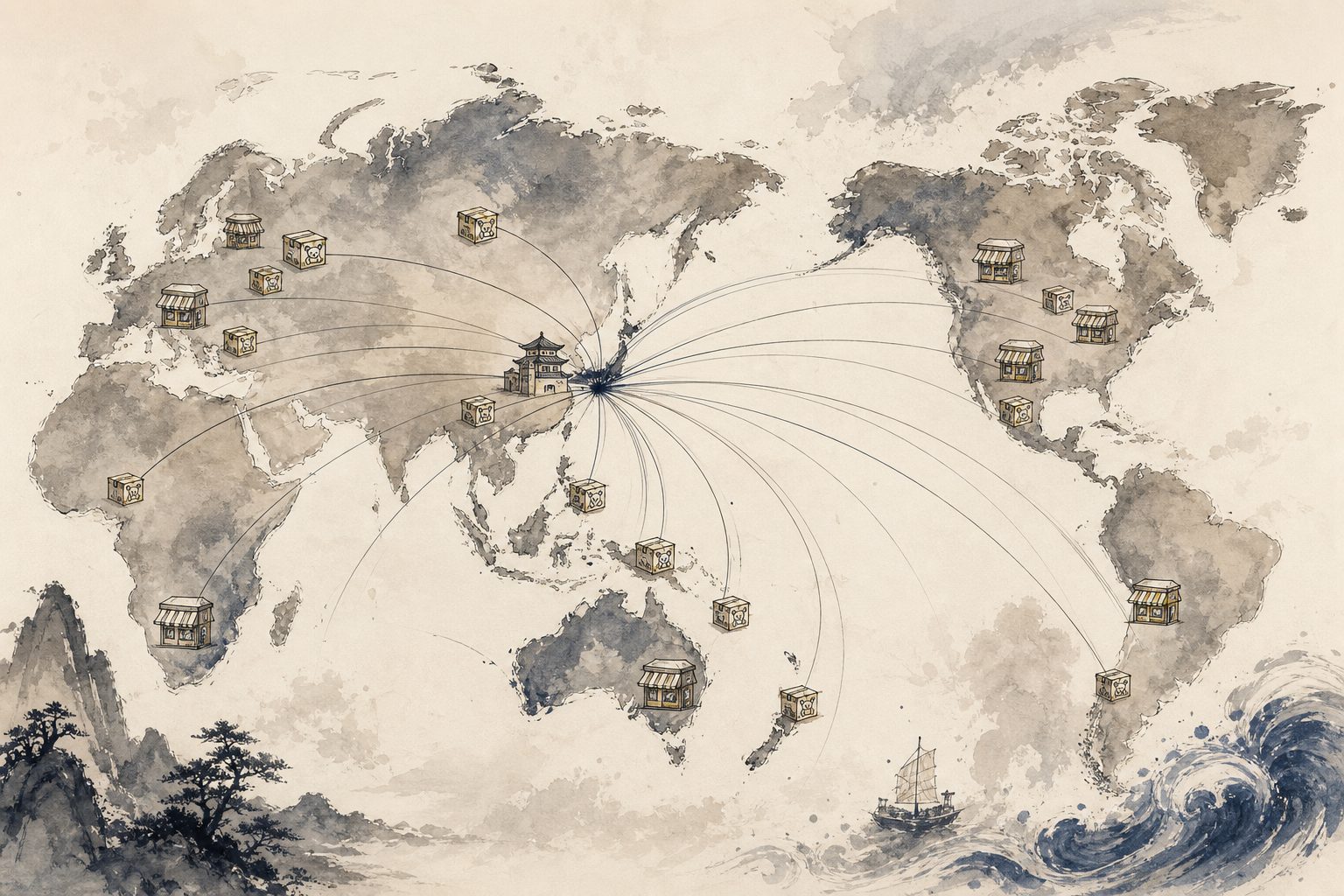
Lovebu was created by a Chinese company called Popmart. In the fiscal year ending December 2025, sales increased by 1,851 TP3T year-on-year to 37.12 billion yuan (approximately 811 billion yen), and adjusted net profit increased by 284.51 TP3T to 13.08 billion yuan (approximately 285.8 billion yen), recording explosive figures. In the first quarter of 2025, it recorded a growth rate of 1,651 TP3T, and Lovebu alone is selling more than 100 million units annually. The number of stores has expanded to more than 700 in 100 countries worldwide, and the number of vending machine-type "RoboShop" has also expanded to 2,597.
What's particularly symbolic is that they've even opened a store in a remote corner of Auckland, New Zealand, where Amazon doesn't even exist. And what's more, Japanese school trip students are making the effort to come and buy their products there. When asked why, they were told that "the stores in Japan operate on a lottery system, and you can only stay for an hour." Witnessing these kinds of reversals happening in the far corners of the world makes you feel like you're at a turning point in history.
Popmart's business model is the opposite of Sanrio's "licensing" model. It's a vertically integrated model where they handle everything from planning, design, manufacturing, distribution, and sales in-house, with 901 TP3T of sales coming from their own channels. It's also called the "reverse Disney model" because they create characters first and compete solely on the unboxing experience and social media virality, without relying on stories or movies.
The decision to abandon the idea of "crushing counterfeits" and instead choose "separate categorization"
For many years, China has been known as a "country of counterfeit goods," and it was common knowledge in the industry that character-based businesses could not thrive there. However, with Popmart's rapid growth, counterfeit versions of its iconic character, "Lovebu," are now circulating in large quantities worldwide.
Naturally, Popmart is cooperating with local police to protect its brand, continuing its "all-out resistance" by cracking down on counterfeit factories and taking ruthless legal action. However, what's interesting is that while the brand is working hard to eradicate the problem, the market and consumer community have undergone their own unique evolution.
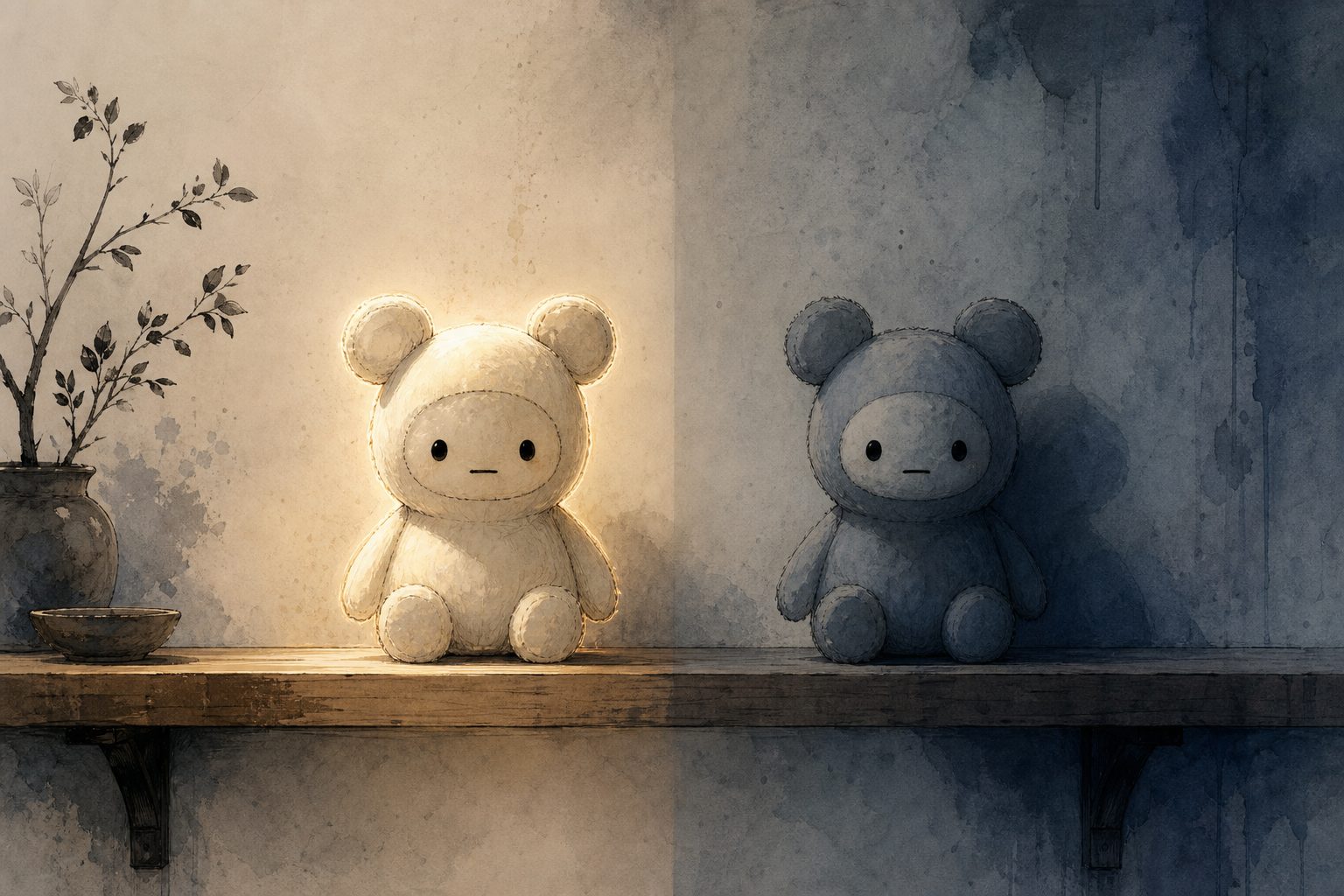
On social media platforms in Southeast Asia and other regions where the product is experiencing a huge boom, the slang term "Lafufu" has become established among users to refer to counterfeit products. As a result, even though they may look identical, consumers have drawn a clear line in their minds between "real Lovebu" and "fake Lafufu."
In today's youth communities, being able to proudly answer "It's a real lovebu" when asked "Is that a lovebu? Or a lovefu?" has become a kind of status symbol and identity.
The holographic QR code authentication provided by the brand, and the "blind box" purchase experience where the contents are unknown until opened, further stimulate users' desire to own the genuine article. Ironically, the inescapable proliferation of counterfeit goods (rahoof) is creating an ecosystem that reinforces the overwhelming rarity and brand value of the genuine article (lovebu).
The real lesson for small and medium-sized enterprises: Branding is the power to "draw a line."
I don't want you to misunderstand me here; I'm absolutely not saying that we should ignore counterfeit products. Trademark registration and legal measures are, of course, necessary precautions, and some studies suggest that the economic losses caused by counterfeit products in Japan alone amount to 3 trillion yen annually. What I want to focus on is something more fundamental. I believe that the most powerful weapon against counterfeiting lies not in laws or technology, but in "how clearly defined the brand's identity is."
We define a brand as "being special to a specific person." Branding is the process of intentionally and continuously reinforcing that specialness. If it's not clear who that "specific person" is, we can't even find the words to explain the difference between our brand and imitations. When we actually get involved in a company's branding, the first thing we do is structure and visualize the gap between "what we want to be" and "where we are now." Only when we can see the true nature of that gap can we then seamlessly implement a series of measures: verbalization, visualization, dissemination, and output.
In short, if I were to define "branding" in a single sentence, I would say it's not about creating a barrier to prevent imitation, but rather about continuously designing a consistent experience that makes customers want to continue choosing the genuine article, even if it is imitated.
To use the Lovebu example, Popmart consistently explained "what Lovebu is" through multiple touchpoints—the blind box opening experience, QR code authentication, and the character's world—which I believe allowed consumers to clearly see the essence of "this is the real thing." A brand with a blurred outline will be lost in the minds of customers the moment counterfeit products appear.
Many small and medium-sized enterprises (SMEs) may not yet be large enough to be easily imitated. But consider this: if a competitor were to imitate your service name or design style, does your brand have enough distinctiveness to allow customers to immediately tell you which is the real thing? If you can't answer this question immediately, I believe that's a management issue that needs to be addressed before even considering countermeasures against counterfeit products.
Being imitated can actually be a compliment.
What's interesting is that Lovebu's actions have prompted LVMH (the world's largest luxury group, which owns Louis Vuitton and Dior) to approach Popmart. In December 2025, the head of LVMH's China division was appointed to Popmart's board of directors. In October of the same year, LVMH brand Moynat launched a collection in Shanghai in collaboration with Lovebu's designer, and Chairman Bernard Arnault himself visited the venue. Considering the precedent of Louis Vuitton's collaboration with Takashi Murakami, which generated over $300 million in sales in its first year, this suggests that the luxury industry itself sees the potential for characters that were once considered "toys" to be elevated to "art."
The situation of a large number of counterfeit goods circulating can also be seen as a strong market signal that "there are many people who want these products." I believe that the reason luxury brands have been able to continue to enhance their brand value while facing the challenge of counterfeiting for so long is that they have focused not on trying to avoid being imitated, but on continuing to be chosen even when imitated.
Will it end as a fad, or will it become a cultural phenomenon?
What resonated with me most about this incident was the perspective that "trends always fade, but culture remains." In contrast to Sanrio, which has quietly but steadily established itself as a culture for 50 years without ever experiencing an explosive boom, Lovebu's stock price has fallen 401 TP3T from its peak as a reaction to its rapid growth, and some analysts are concerned that it may be a repeat of past toys that ended up being just a fleeting trend. Popmart itself has also revised its growth target for 2026 to a conservative level of "more than 201 TP3T" and has begun to shift its focus to nurturing the next generation of characters.
Creating a fleeting trend and creating a culture that is loved for decades are similar but entirely different skills. And I believe that what ultimately separates them is how intentionally the brand's identity has been designed and how consistently it has been maintained.
Even something as simple as how a company deals with counterfeit products clearly reveals how it perceives its brand. Is it focused solely on "protecting" it, or is it thinking about "emphasizing its identity"? When companies try to address this question only within their own organization, they tend to settle for the answer of "continuing as before." That's why we begin our support by starting with interviews with management and key personnel, and then working together to articulate the current situation and the gap from an external perspective. If you feel that you'd like to discuss the identity of your brand with someone, please feel free to contact us at that time.
WRITTEN BY
Ichikawa Atsushi
Representative Director and Chairman
After starting his own business at the age of 26, he has over 20 years of management experience in the design and branding fields. In 2016, he moved with his family to the Philippines and established a local IT outsourcing company, leading its global expansion. Currently, as a "GLOBAL BRANDING AGENCY," he supports the growth of companies while also actively working on organizational reforms within his own company. Based on the real-world struggles and firsthand information he has faced in organizational development and overseas management, he shares practical branding and organizational theories that are thoroughly aligned with the perspective of business leaders.