Are you viewing your company's office as just a "place for employees to work"? If so, it might be a huge missed opportunity.
Now that remote work has become widespread and it's possible to work from anywhere, the value of the office as a physical space is being redefined.
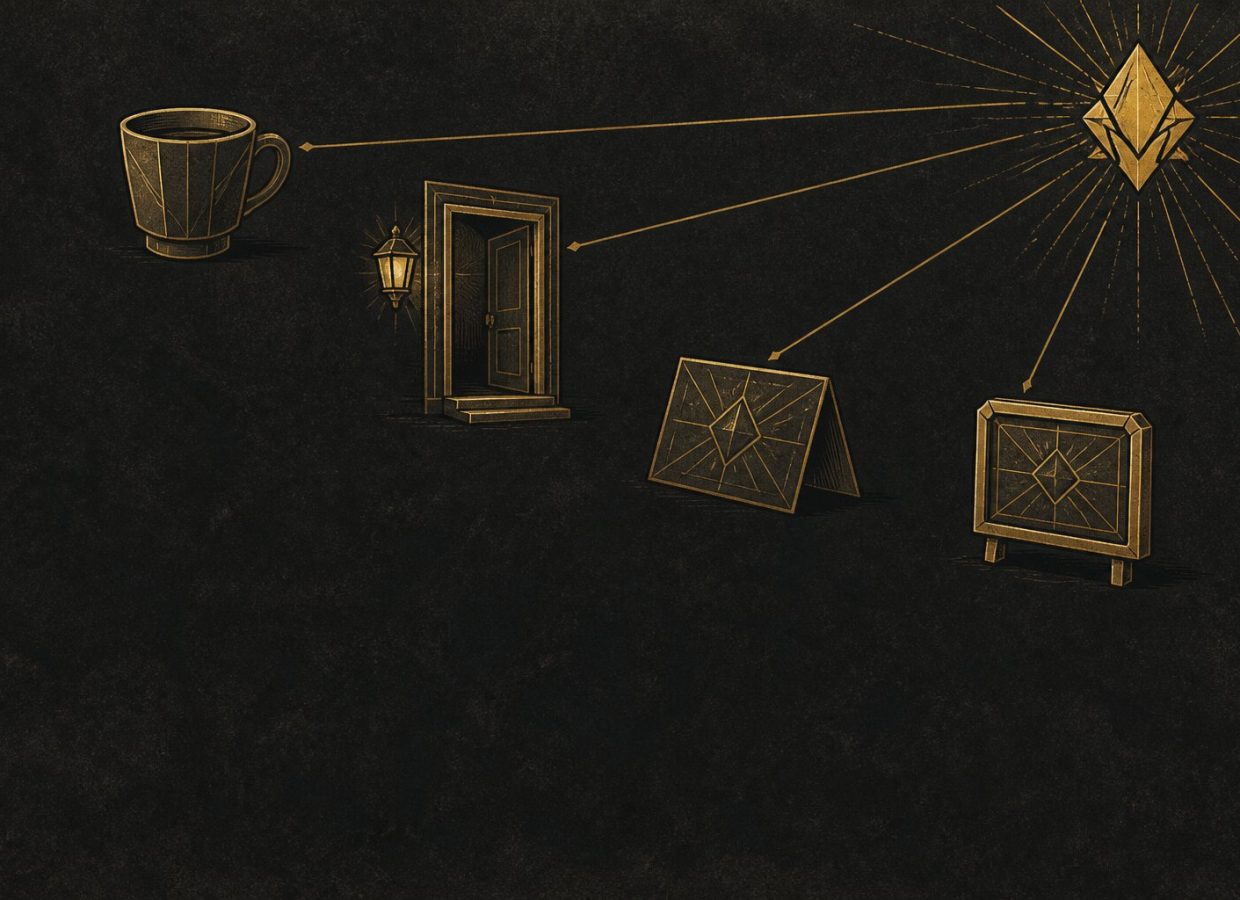
The office embodies a company's brand identity, serving as the most powerful "medium" to convey messages to customers, job seekers, and colleagues.
This time, we will introduce "office branding," which can be started without a major relocation.
Why now, "Office Branding"?
Branding is the effort and strategic impression management that makes a company "special" to its stakeholders.
For example, let's say your company has adopted the brand identity of a "h_t_tp_s://www.deeply.co.jp/wp-content/uploads/2023/08/01-9-1.jpginnovative and creative company_h_t_tp_s://www.deeply.co.jp/wp-content/uploads/2023/08/01-9-1.jpg." However, what if the office you visit is dimly lit, piled high with documents, and employees are working with tired expressions? This creates a fatal "discrepancy (gap)" between the brand image the other person holds and the reality.
Bridging this gap and providing the message companies want to convey as a spatial experience. That is office branding.
No major construction needed. The magic of a "small-scale" renovation focused on the guest area
When you hear "office branding," you might imagine a large-scale renovation, but it's not necessary to touch every area.
First, let's focus on the "entrance" and "meeting rooms" where clients and job seekers will visit. Simply concentrating investment in these areas, which serve as the company's "face," can dramatically change external perceptions.
Transform the "atmosphere" with furniture and flooring
For example, a conference room. Just rows of bare white tables and plastic chairs only give the impression of a utilitarian workspace.
However, changing to a comfortable chair and reviewing the flooring and wallpaper will greatly improve the impression of the space, making invited guests feel a sense of security and trust.
Has that monitor just become a "black board"?
Are the monitors in your conference rooms and entrances left black when not in use? In reality, this is the most accessible and effective branding space.
Display a "WELCOME" message with the visiting company's name, or play a video showcasing your company's vision and achievements. This alone can turn waiting time into a valuable opportunity for information gathering, and also serve as an icebreaker before a business meeting.
At LionHeart, we have developed and are offering our own app, "TVable," which allows anyone to easily operate such digital signage.
Design not only "space" but also the "information" that flows within it. This too is excellent office branding.
"Fragrance" Production Appealing to the Five Senses
Not just sight, but "scent" is also an important branding element.
Our meeting rooms have different scents tailored to their function, such as a woody scent representing "sincerity" in one room and a citrus scent creating "vitality" in another. These scents can subtly influence people's emotions and behaviors on an unconscious level.
Designing "Ways of Working": ABW and Responding to Hidden Needs
In recent years, the term "ABW (Activity Based Working)" has become a common trend in office environments. It's a way of working where employees can freely choose their work location and hours based on the nature of their tasks. You might think, "It's impossible because we have assigned seating," or "Changing the office layout is too expensive." However, there are ways to start implementing this philosophy starting tomorrow, using your existing desks as they are.
Achieving an open office with "furniture" and "operation"
The biggest obstacle to implementing free address seating is actually the "cabinets (wagons)" under the desks. When personal belongings are underfoot, it becomes "your own seat (assigned seat)."
How about starting with the opposite idea: getting rid of this cabinet?
Instead, we will install "personal lockers" along the wall to store work tools and PCs.
With just this one change, the executive desk transforms from "personal property" to "shared space." You can start with "let's give it a try" without making any major layout changes.
The person sitting next to you changes every day. That alone, which wouldn't have happened in the era of assigned seating, fosters communication across departments and sows the seeds of new ideas.
Furniture arrangement that creates "escape routes" and "options"
When looking at workplace environment surveys for employees, the top complaint is always "lack of break and rest areas."
In fact, this dissatisfaction is the "real voice" that we at Lionheart hear almost every time we interview employees of our client companies.
For example, once a foundation for free addressing has been established through initiatives like those mentioned above, it would be a good idea to gradually increase the "choice of locations."
This also doesn't require major construction and can be achieved just by arranging furniture.
Place a "meeting table" in the work area.
You can use it for consultations that don't require booking a meeting room or as a workspace when you want to take a break from your desk. This alone gives you the freedom to "choose your location."
• Provide a "Sit-Stand Desk (Standing Desk)" area
Working while standing can help you stay alert and alleviate back pain, making it an effective strategy from a health management perspective. If placed in a scenic spot by a window, it can become the ultimate refreshment seat.
Install "focus booths."
To address common office complaints such as "difficulty concentrating" and "disturbing phone conversations," we will provide "cocoon spaces" where individuals can immerse themselves in their work without interruption.
The Magic of "Magnet Spaces" That Attract People
It's not just "distribution" that's important, but also the method of "gathering."
We will design a "Magnet Space" that intentionally consolidates pantries, copy machines, trash cans, and other shared facilities into a single location. By creating a place where people naturally gather, we aim to foster spontaneous inter-departmental communication (casual conversations).
Designing spaces that create a clear distinction between "focus" and "interaction" maximizes an organization's potential.
Concentration and interaction.
The shortcut to unleashing an organization's potential is to design this contrast not through major interior renovations, but through "furniture" and "operation."
【Things You Should Know】Pitfalls to Avoid When Building a "Wall"
We've discussed how to be creative with furniture and operations, but when you get serious about zoning, you might find yourself wanting to "put up walls (partitions)." However, building full-height walls (full-height partitions or custom-built walls) within an office comes with several hurdles to be aware of.
Work classification and owner approval
When walls are constructed, they often interfere with ceiling equipment (lighting, air conditioning, disaster prevention devices), making it highly likely that the work will be classified as "B-grade construction" performed by the building's designated contractor. In such cases, costs tend to be higher. Furthermore, prior approval from the management company or owner, as well as confirmation of the restoration conditions upon move-out, are essential.
Impact on air conditioning and ventilation
When air conditioning zones are divided by walls, it can lead to insufficient supply and return air, making heating and cooling less effective. To prevent this, it may be necessary to install vents (louvers) in the walls, or to relocate or add air conditioning units.
• Impact on disaster prevention and safety
It is also essential to conduct evacuation safety reviews and studies based on the Fire Service Act, considering factors such as sprinkler malfunction and impact on evacuation routes.
Thus, full-scale custom construction work tends to become large-scale and carries a significant burden in terms of cost and effort.
That's why starting with "small-scale" initiatives like utilizing furniture and partitions as previously mentioned could be a smart first step in office branding.
Space alone isn't enough. The main star is "people."
No matter how sophisticated an office you create, it cannot be a good brand if the people working there are not vibrant. In office branding, the behavior of the staff, such as their expressions, greetings, and attire, becomes important content that constitutes the space.
"I want to be a professional worthy of this office." By creating an environment where employees can take pride in this statement, their awareness changes, their actions change, and as a result, a corporate culture is nurtured. This is the true essence of inner branding.
First, let's articulate the objective.
Office branding is more than just interior design. It's a means to solve management challenges by asking "Why are we doing this?" and "Who do we want to be perceived by and how?"
We at Lionheart Inc., as a branding agency, will accompany you from the stage of verbalizing your "objectives," "ideal state," and "challenges."
"I vaguely feel like there's a problem, but I don't know where to start..." If you're a business owner who feels this way, please talk to us.
We propose the optimal spatial strategy to accelerate your brand.