


BLOG
Blog

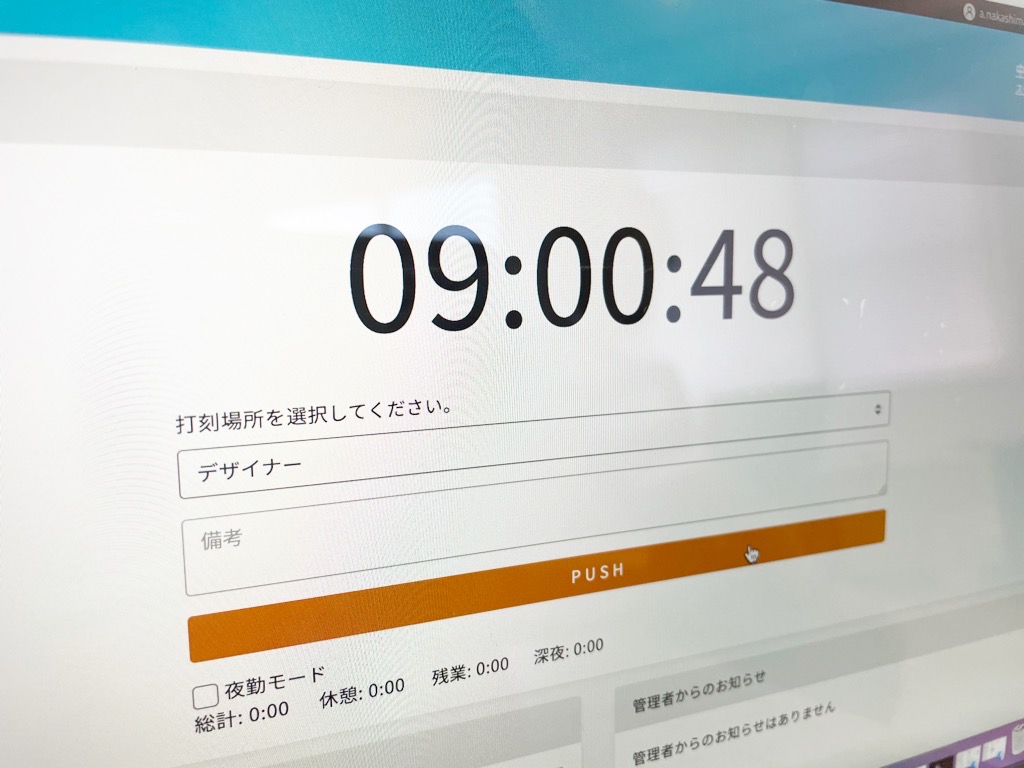
You hear the term "digital transformation" a lot these days, don't you?
As a recent trending keyword, the term "DX" is displayed everywhere at IT-related trade shows.
According to the Ministry of Economy, Trade and Industry's definition, the term "DX" refers to "companies responding to rapid changes in the business environment by utilizing data and digital technologies to transform products, services, and business models based on customer and societal needs, while also transforming operations themselves, organizations, processes, and corporate culture and climate to establish a competitive advantage."
It sounds quite sophisticated, doesn't it?! But in reality, there are many cases where companies claim to be undergoing DX (Digital Transformation) but only go as far as digitalization and IT implementation.
Currently, the term "DX" is being misused as a trending keyword in marketing.
Actually, our company has also jumped on the bandwagon! Starting this year, we've been seriously working on DXing our back-office operations.
Even our company may still only be at the level of digitalization and IT implementation... However, we believe that thoroughly implementing these changes will lead to a competitive advantage, so we have used the term "DX" here.
As I usually handle back-office operations (labor and accounting), I was part of the team driving the back-office DX transformation (lol).
While we have previously undertaken smaller initiatives such as digitizing tax filing, this time we have decided to take on a company-wide challenge by introducing a new attendance management system.
This time, I would like to share what kind of creative ideas we have used to promote this initiative and what kind of changes have occurred within the company.
When we decided to implement a time and attendance management system as part of our digital transformation, our motivation was "strategic human resources management."
For the past two or three years, our company has had an executive officer in charge of human resources (primarily recruitment), and instead of a haphazard recruitment plan based on the assumption that "we need to hire because we're short on staff," we have developed a vision,Introducing "strategic personnel management" in line with the business plan.We have been promoting this.
theIn order to implement "strategic human resources management," it has become necessary to accurately understand personnel costs and the productivity of each individual.It is.
Before implementing the system, we had numerous meetings with a certified social insurance and labor consultant.
Depending on the company, the attendance management system may be in conflict with the work of a labor and social security attorney, so it would be best to consult (or inquire!) beforehand to ensure a smooth process.
When introducing a systemThe initial setup involves many aspects related to labor laws, so it's advisable to consult with a labor and social security attorney.I recommend doing that.
Furthermore, as a member of the promotion team,We need to instruct everyone on how to use it, so we'll do a test run beforehand.We also did that.
Questions and problems inevitably arise once operations begin.
We decided to prepare in advance to create an environment that would allow us to resolve those issues quickly.
① Dedicated chat room
Creating an environment where people feel comfortable asking questions is key.Is.
Using chat allows employees to ask and answer questions at their own convenience, and the fact that these exchanges can be instantly shared with all employees is also very convenient.
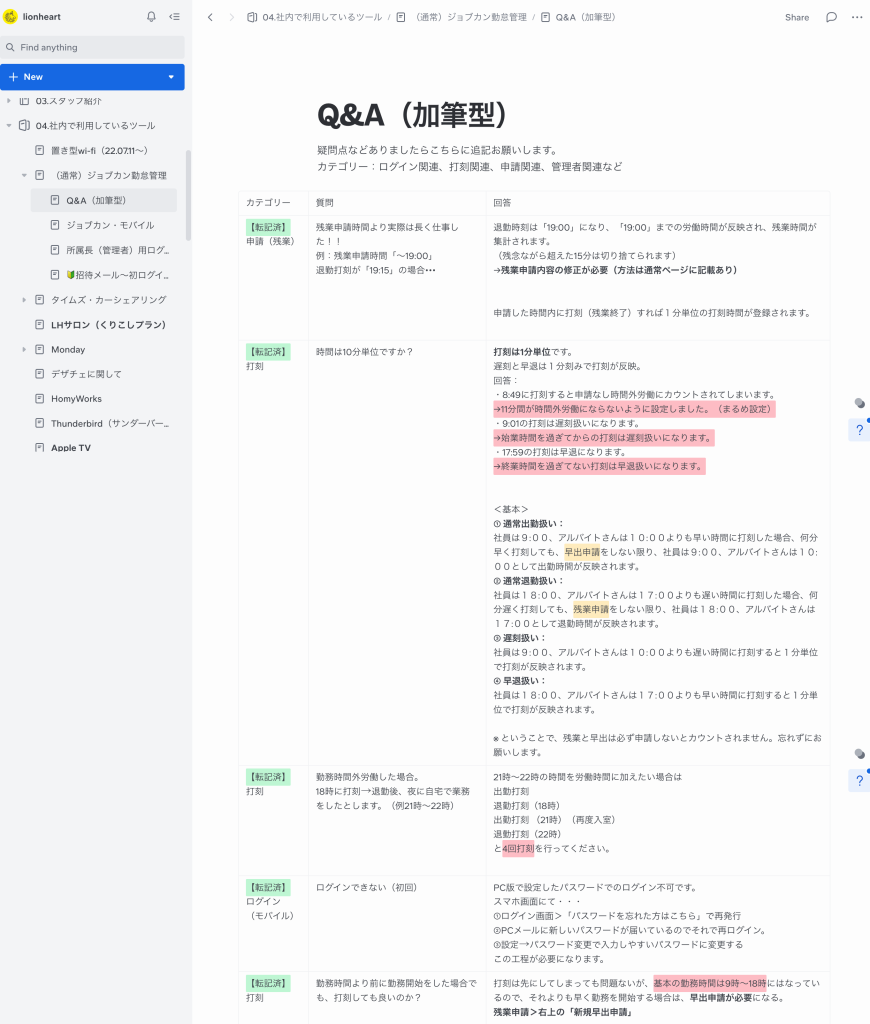
This section compiles information from the project team, as well as Q&A sessions and other exchanges.I decided to do it.
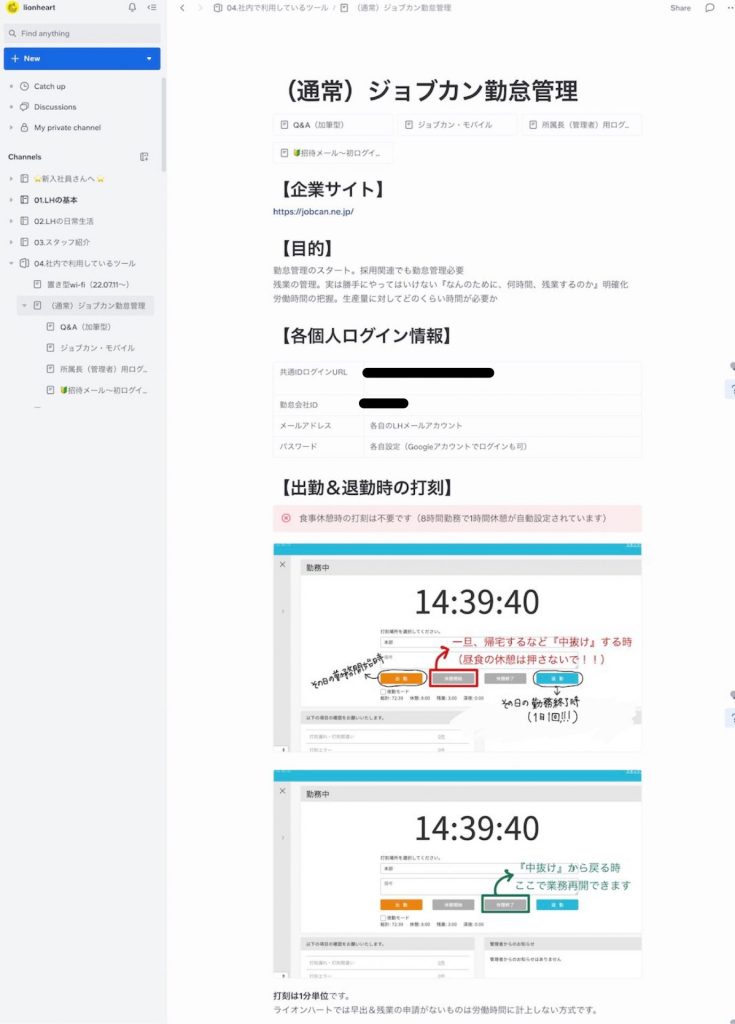
② Sharing operational rules via the company wiki
At our company, we utilize an internal wiki to accumulate and share various kinds of knowledge within the organization.
We created a draft of the operating rules based on the conversations in the chat room, but as we actually put them into operation, revisions and additions to the rules will inevitably occur.
So,We publish and share the updated rules on our internal wiki so that anyone can understand them.I did.
By doing thisIt can also be used as a manual when new members join the company.can.
The driving force included myself and one other reliable colleague.
This is the executive officer in charge of human resources mentioned earlier!
Attendance management is directly related to personnel costs (salaries).
Therefore, I often found myself unsure of the decision,Having team members capable of making business decisions minimizes the time spent "waiting for decisions."I was able to do it.
When undertaking new initiatives or introducing new systems company-wide, we recommend including individuals who can make management decisions and approve them as part of the team.
When there are things that an individual employee cannot decide on, or areas where they tend to waver, relying on them allows us to move forward smoothly.
At our company, there's a close relationship between employees and executives, and having colleagues on the project prevented me from feeling isolated.
Because it will take time before it can be fully implemented,Prepare with focus and at a good pace.That's the key point.
Since I was involved in this project while also handling other duties, I think if I had been working on it alone, the launch would have been delayed by several months.
We used the company-wide morning meeting to make an announcement to all employees.
First,We will explain the purpose of the implementation to everyone.。
Then, I explained to everyone that I needed their cooperation (clocking in and out, applying for overtime and early starts, and getting approval from their supervisors), and I gave a lecture based on the operational rules and operation manuals that I had posted on the company wiki.
The attendance management system we introduced this time was the standard time card system. Perhaps because of this, I was struck by the number of specific questions that arose, such as, "How should I handle this situation in my own work schedule?" These questions allowed me to gauge everyone's level of understanding, and I felt that the company-wide morning meeting was a good first step in promoting the system.
What made me even happier was that one of the employees spontaneously compiled the Q&A sessions from the morning meeting into the company wiki.
This kind of cooperation is truly appreciated by the members of the project team.
Our company's philosophy is "creating smiles," and that employee certainly helped create my smile!

① Immediate response to the question
Once operations began, a lot of questions and problems arose... (sweats)
We've undertaken various initiatives in the past, but we've never seen so many questions or such a high level of interest before.
Since this concerns salaries (including overtime), I felt that everyone was taking a proactive approach and participating in this initiative as if it were their own responsibility.
This only heightened the sense of urgency for us, the members of the promotion team. On the other hand, I also found myself wishing they would always be this proactive.
Here,Answer the question as soon as possible.I made it a point to keep that in mind.
Since they've shown interest and are participating, if this enthusiasm cools down, we won't be able to move forward with the digital transformation of our back office.
② Making time clocking a habit
Because clocking in isn't a regular part of their morning routine, many people are forgetting to clock in!
We, the members of the promotion team, thought it was a somewhat unsophisticated method,Alerts will be sent to remote work members via chat.Release,Greet the members who are coming to the office.I went around doing that.
Such intrusive behavior can become stressful if it continues every day,I put up a sign on the company door that says "Time Stamping".I did too.
It's a very analog method, far removed from digital transformation (DX)...
moreover,We need to clearly explain the consequences of forgetting to clock in and out.I did.
Since we'll have to adjust the working hours later, it will take up the time of my supervisor, who is in charge.。
Thanks to these grassroots, down-to-earth activities, our members have started calling out to each other and checking in on one another!
We had anticipated that it would take about two months to get the system fully operational, but thanks to everyone's cooperation, we were able to launch it much earlier than expected.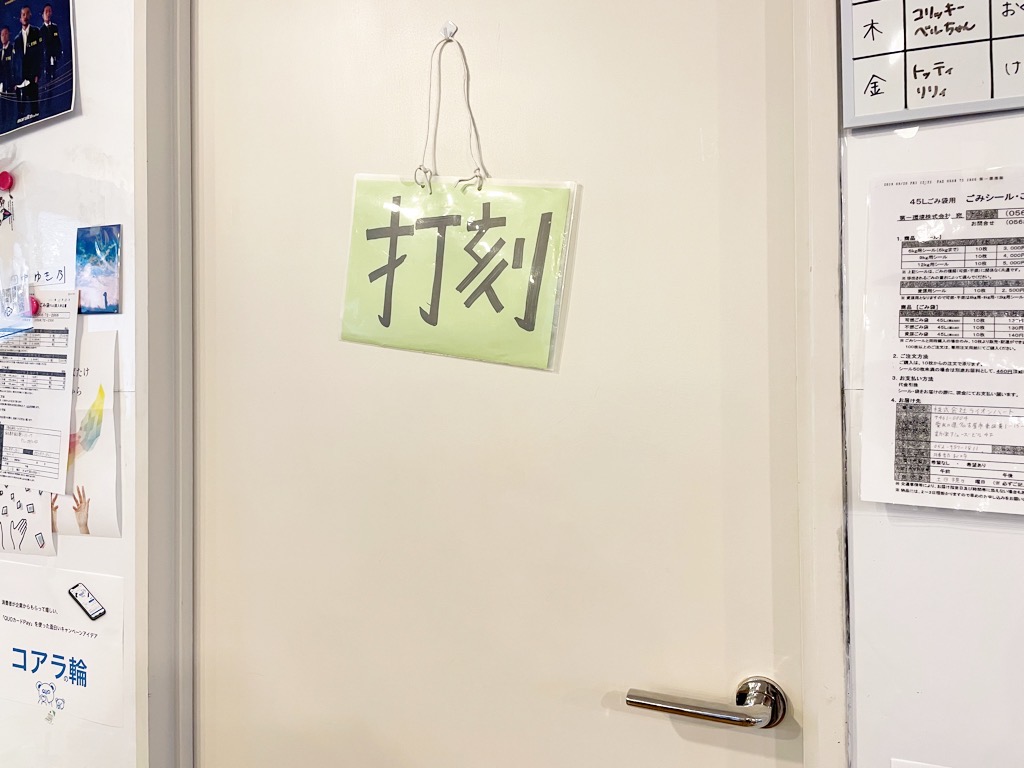
If you only consider the suggestion to encourage employees to clock in, it might seem like a rather low-level improvement method, but in fact, it also had some secondary benefits.
The initial outreach led to unexpected positive effects, such as increased communication within the company.
For example, although everything is completed online through the system, departmental morning and evening meetings are now used to share work progress and submit overtime requests, allowing us to have a more accurate understanding of the situation of our colleagues in the same department, which is one of the achievements.
recently,When you find out that your colleagues are working a lot of overtime, you naturally start to show concern and initiate communication such as, "Are you feeling okay?"It is.
When we have new members joining the team, we plan to have them give a lecture on how to use the attendance management system and its rules within the department.
I believe that explaining what we're doing to others will deepen their understanding, and increasing interaction within the department will lead to smoother communication!
In promoting this attendance management system,Project management tool implementation projectThat was very helpful.
The project leader, perhaps aware of the difficulties involved in implementation and promotion, was very cooperative this time around.
Introducing a new system requires considerable effort.
Among them,The key is to create a system that involves thorough preparation, sharing the objective, gathering everyone's opinions to identify issues and make improvements without immediately striving for perfection, and then making these improvements a habit.I really feel that way.
Now, as this attendance management system becomes established within the company, the "strategic human resources" approach mentioned at the beginning will likely accelerate.
If you want to expand your company's size, increase productivity, or improve profitability, I think streamlining back-office operations is often overlooked.
It tends to get put off, doesn't it?
The figures obtained from accounting and labor management are important factors for business decision-making.That's because.
Blogs in the same category
Same Category

# Management
Developing an AI-powered project management tool in-house — The faster we create things, the more important it becomes to understand "why we are creating."

# Management
The reason why I've started wanting fewer things and why I can't put my purpose into words are probably the same thing.

# Management
What a business leader should really do when they realize, "I can't compete with him."