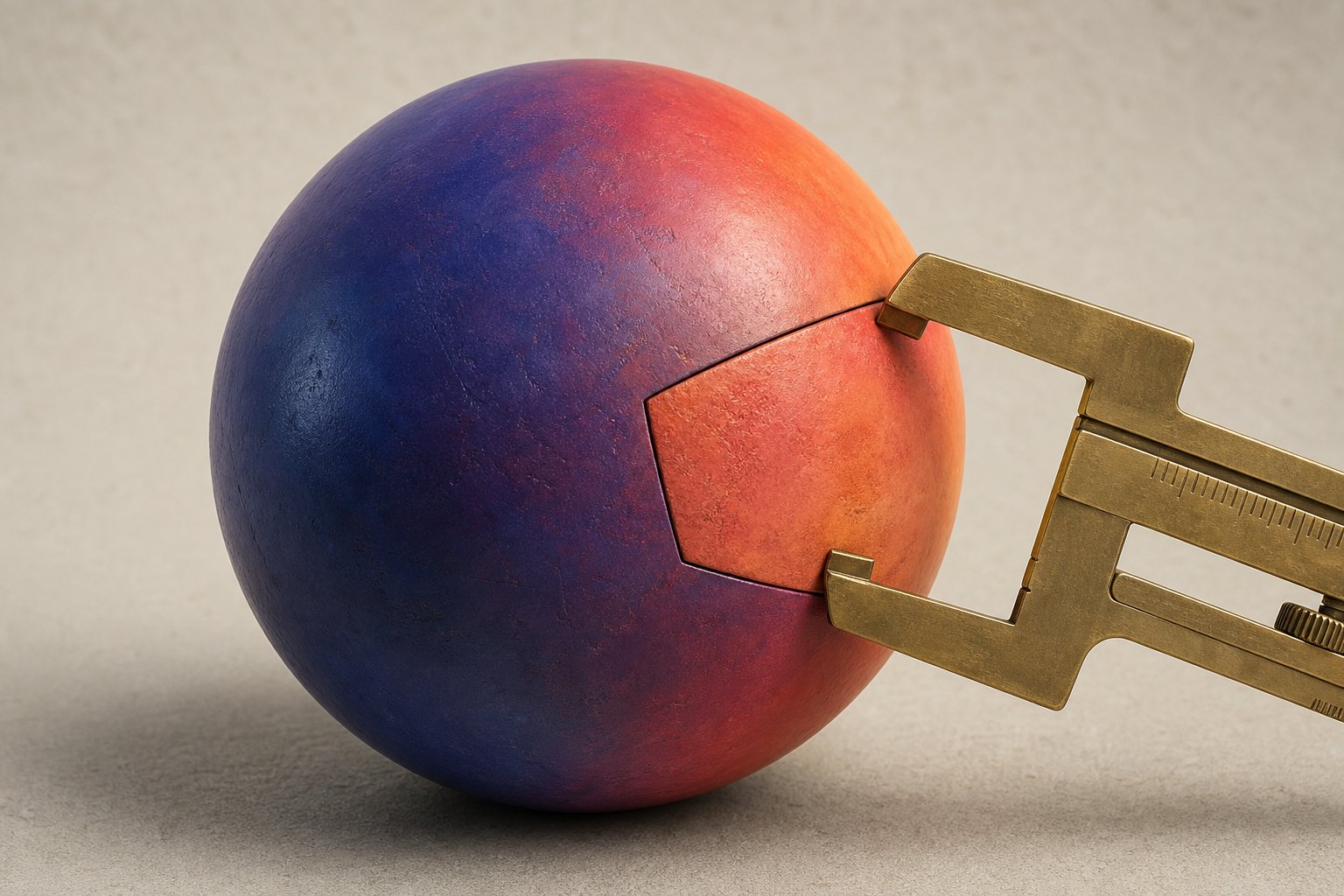
Requests for "cleaning up after AI" increased by 87%. The reason repair work is often undervalued is because there isn't a "correct" solution before the repair is even done.
Requests for "cleaning up after AI" increased by 87%. The reason repair work is often undervalued is because there isn't a "correct" solution before the repair is even done.
I stopped what I was doing when I saw the news that requests for jobs where humans correct text and images created by AI are rapidly increasing among freelancers.
The first thing that came to mind was, "Ah, that's what's happening in my industry." The work of creators is shifting from "making" to "fixing." And what's more, that "fixing" is being undervalued to an astonishing degree.
Let me get straight to the point. The reason cleanup work isn't worth it isn't because the AI is inaccurate. It's because nobody decided "what the right answer is" before fixing anything. I believe the price of cleanup work depends on whether or not review criteria were established from the beginning.
The "AI Cleanup" Market: A Look at the Numbers
According to a report by Search Engine Journal in September 2026, based on a summary of a Guardian article, the number of job postings tagged with "fix AI errors" or "fix AI hallucinations" on the freelancer platform Freelancer.com increased by 871 TP3T between August 2025 and June 2026, reaching 10,760 worldwide. The most common genre was graphic design, followed by video editing, proofreading, and writing.
The same article also mentions that Upwork saw a 701 TP3T increase in projects related to "fixing AI output" compared to the previous year, and that searches for "AI cleanup" on Fiverr more than doubled between 2023 and 2026. However, these three metrics measure different things, so you can't simply add them up to say "the whole has increased by X times." Nevertheless, they are all heading in the same direction.
The accounts from those on the ground were also concrete. An illustrator in Florida was offered about $500 to correct 13 to 15 illustrations for a children's book created by AI. The estimate was apparently 15 minutes per illustration. His minimum wage is $65, so he declined. Another multimedia editor spent 2 to 3 hours each correcting about 100 AI-generated tarot cards in Photoshop. He said there was nothing he could do to fix them, and he had to tell the client, "These files are beyond saving."
The reason why repairs are often underestimated is that there is no single correct solution before the repair is even started.
The estimate that one sheet can be fixed in 15 minutes assumes that "the finished product is almost correct and only minor adjustments are needed for the flaws." However, the person doing the repairs must first find out what is wrong. If it's an obvious mistake like six fingers, then it can indeed be fixed in 15 minutes.
The tricky part is when something just doesn't feel right. It doesn't fit the brand's image. It doesn't resonate with the target audience. Something is off from the objective. These kinds of discrepancies are impossible to fix without a standard for determining what needs to be corrected. Without a standard, every time you make a correction, you start thinking, "Actually, this is better," and before you know it, it would have been faster to just start over from scratch.
Therefore, I define cleanup as follows: Cleanup is the invoice for decisions that weren't made at the beginning. As AI can now produce things quickly, the decision of "what should be produced" is pushed to the back, and the payment for that falls on the person who has to fix it. The client thinks they've saved money, but in reality, they're outsourcing the most expensive part of the process at the lowest price.
How we can avoid ending up with AI output as "something's not right"
Lionheart has a saying: "Wearing the same glasses" as the client. At the beginning of a project, they ask the client about their ideal state and their current situation, and together they articulate the gap between them. This is where the challenges, objectives, and requirements are determined. Then, the output is evaluated solely on whether it "fulfills those objectives and requirements." This is the fundamental approach of the LH method.
The key is to not let personal likes and dislikes influence the evaluation. For example, suppose a business owner in their forties says, "I don't really like this design." But if the project's target audience is a recent graduate, that opinion is irrelevant. If you're not the target audience, your feelings are irrelevant. I believe that review is about setting aside personal preferences and focusing on the objective.
These glasses are shared by both designers and engineers. And they are used to evaluate both AI-generated and human-made products. This is because the act of judging whether something is good or bad remains the same, regardless of who created it. Even a cool design created by AI or a well-made program can be met with "something's not right" if it's presented to a customer without going through a review process. I feel that this happens relatively rarely in our workplace. This isn't something that can be verified with numbers, but rather something I experience on a daily basis. The only reason I can think of is that we review things using the same standards as our customers.
The amount of work involved in creation will decrease. What remains is judgment, and I'm on the same side.
With the spread of AI, the minimum quality standards for design and writing have risen considerably. Tasks that were once valued as specialized skills, such as gathering and summarizing information and formatting, are losing their value. Conversely, I feel that the value of unconventional expression and the intuition to read the atmosphere of a situation and come up with questions is increasing.
This isn't someone else's problem. I myself sometimes draft articles by working with AI. If AI can handle everything from interviews to writing the final manuscript, the job of a writer will become unnecessary. The same thing could happen to design, direction, planning, and branding. I think the increase in requests for cleanup work is because those who started these projects are already feeling the pain.
Honestly, it's still unclear whether this job will last. The Australian writer featured in the article believes that much of this type of work will decrease within the next 5 to 10 years. On the other hand, the aforementioned illustrator stopped accepting cleanup requests around the end of 2025, and was later called back by a client who was dissatisfied with the results to create new hand-drawn artwork.
I believe that work doesn't end up with the person who fixes it, but with the person who has the judgment to make it.
Things the client should do before handing over the AI output to a human.
The use of AI to create drafts for B2B marketing and branding teams, and then outsourcing the final touches, will undoubtedly increase in the future. Before requesting revisions, there are three things you should do.
Write the purpose and evaluation criteria in one sentence. Decide beforehand who you are communicating with, what you are communicating, and what constitutes a passing grade.
Don't just order a single item for a fixed price; first, ask for an assessment. It's impossible to know if it can be repaired or if it would be faster to remake it without examining the contents.
The decision to repair or remake should be made at the initial stage of the request. Repeated revisions followed by a "let's start from scratch" is the most expensive option.
All three points are unrelated to whether or not AI is used. The entry point to successful work has always been the same, even in the days when humans were doing the work. AI has simply started to charge a tangible price for skipping that entry point.
Summary: An increase in cleanup work is a sign that decision-making is being delayed.
The increasing demand for "cleaning up after AI" stems from the fact that decision-making can't keep up with the speed of creation. Companies that can prioritize decision-making will see a reduction in the amount of corrective work they need to do. Companies that can't will end up paying for underestimated invoices all at once later.
If your company's AI output is stuck at the point of being "somehow off," why not start by articulating the purpose and evaluation criteria together? What we do every day is adjust those "glasses."
FAQ
Q. Is cleaning up after AI a job that will grow in the future?
A. I don't know. Some believe the number will decrease as the accuracy of the model improves. I'm concerned that if simple tasks that are currently assigned to new recruits are taken over by AI, opportunities for on-the-job training will disappear. This will make it difficult to train specialists. I'm worried that there will be fewer people available to clean up the mess.
Q. Is it okay to deliver the AI-generated output as is?
A. I wouldn't recommend it. If you're going to release it without going through the review process, there's no point in having people there. The problem isn't the AI itself, but the fact that nobody is paying attention to it.
After starting his own business at the age of 26, he has over 20 years of management experience in the design and branding fields. In 2016, he moved with his family to the Philippines and established a local IT outsourcing company, leading its global expansion. Currently, as a "GLOBAL BRANDING AGENCY," he supports the growth of companies while also actively working on organizational reforms within his own company. Based on the real-world struggles and firsthand information he has faced in organizational development and overseas management, he shares practical branding and organizational theories that are thoroughly aligned with the perspective of business leaders.