Why a former fighter pilot works at a Starbucks checkout counter: Purpose can only be born from the feeling of having "made a difference."
The other day, I was watching a news video that I couldn't take my eyes off of. In a Starbucks in Sapporo, a man in his 70s was working the register. His name tag didn't show his real name, but his call sign (tack name) from his time in active service. He was a former pilot in the Japan Air Self-Defense Force, who flew F-15s for about 38 years and retired at the age of 55.
The sense of timing I used to keep track of the altimeter, airspeed, and distance to enemy planes in the cockpit is now used to observe how people line up and think, "Does that person know about Frappuccinos?" When asked why he works, he answers, "To make ends meet." I like that he doesn't sugarcoat things. But I'll never forget what he said next: He hopes to contribute to making people like Starbucks and want to come back again.
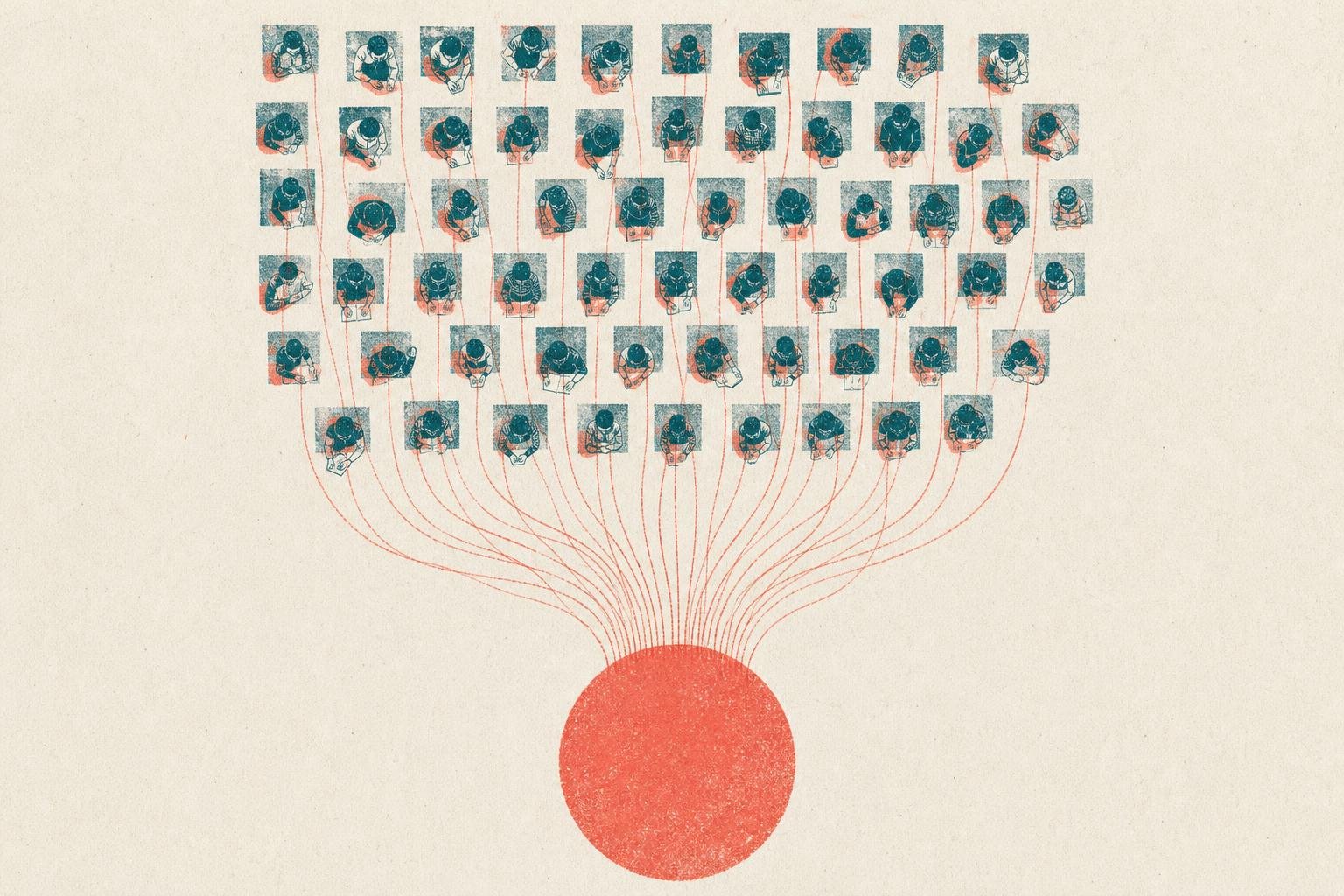
People who work to make a living also say they want to "contribute." These two things are not contradictory. And I believe this is also the reason why corporate purpose ends up being just empty words on a placard. Purpose can only arise as an extension of the feeling of having "made a difference" at the operational level.
In an era where one in seven people is over 65 and still working, the question is, "For what purpose?"
According to Statistics Topics No. 149 (published in September 2026) by the Statistics Bureau of the Ministry of Internal Affairs and Communications, the number of employed persons aged 65 and over in 2025 was 9.43 million, marking the 22nd consecutive year of increase and setting a new record high. They accounted for 13.81 TP3T of the total workforce, or approximately one in seven. Employment rates by age group also reached record highs: 54.51 TP3T for those aged 65-69, 36.21 TP3T for those aged 70-74, and 12.61 TP3T for those aged 75 and over.
The video also featured a diner in Sapporo. All the staff were over 60 years old, with the oldest being 84. The owners spoke of their discomfort with a society that tends to categorize people solely by age. It's true that income is a major reason for working. The video also mentioned that a national survey showed that more than half of people cited income as their reason for working.
But what concerns me is why some people can continue working at a job they started for the income, while others cannot. People will continue working even if the form of the workplace changes. In that case, what companies are being asked is not so much about the amount of compensation, but whether they can demonstrate "who they are helping by working in this place."
A sense of contribution is not a bonus to happiness, but a condition.
Adlerian psychology includes the concept of "community feeling." Adler believed that only when people feel they are useful to someone—that is, when they have a sense of contribution—can they feel valuable and gain the courage to face life's challenges. He thus placed a sense of contribution as a condition for happiness.
Let me state my definition of work here. Work is a place where one can repeatedly experience the feeling of having been useful to someone. While the primary reason people work is to make a living, I believe that's the essence of it. That's why I've always thought it's okay for work to occupy a large part of one's life. However, if a company wants its employees to have the same level of importance on work, the company itself must be attractive enough to justify that. We are still working on that.
By the way, is the desire to be useful to others unique to humans? Social animals like ants, dogs, and chimpanzees also exhibit behaviors such as warning others of danger or helping injured members. However, I cannot definitively say whether this stems from a desire to be useful or is a mechanism for survival.
What I can say for sure is that humans can express the joy of being helpful in words, share it with others, and raise it as a banner. Our company philosophy, "Creating Smiles," is a way of putting into words who we are helping: creating smiles for our customers, partners, and colleagues.
Purpose branding is the process of bringing together things that have been "useful."
Generally, purpose branding is described as "a strategy to communicate a company's reason for existence to the outside world, garner social support, and enhance corporate value." That's not wrong. However, this definition tends to focus on "communication." My definition is this: Purpose branding is the process of gathering the sense of "usefulness" felt by each individual on the front lines and integrating it into a company promise.
Sending your message can come last. If you don't have the necessary materials to put it all together beforehand, even the most well-written sentence will sound like borrowed words.
Even looking at examples from Japanese companies, the starting points differ. Sony, in 2019, adopted the purpose of "filling the world with emotion through the power of creativity and technology," and has made it the core of its management policy, instilling it throughout the company. It's the type of company where a flag is raised from the top and shared by everyone. On the other hand, after announcing its purpose in 2020, Fujitsu has expanded "Purpose Carving," a dialogue program that helps individuals articulate their own purposes, throughout the entire company. This approach uncovers the purpose from the individual's side.
There's no single right answer. However, for small and medium-sized enterprises and B2B companies, I recommend an approach closer to the latter. If you have only a few dozen employees, you can ask everyone if it was helpful. This small size is actually an advantage when it comes to creating a purpose.
Before creating a purpose, gather "thank yous" from those on the ground.
The specific actions involved are mundane. Simply ask your employees, "Who did you feel you helped recently?" That's all you need to do. It could be a comment from a customer or a small act of help to a colleague.
Companies that can easily come up with answers will always see a common thread in the words they gather: "Whose smiles are we creating, and what kind of smiles are they creating?" From there, they can refine the wording of their purpose. Conversely, companies that can't come up with answers have something to do before refining the wording: they need to fix the way in which the feeling of having made a difference reaches the person themselves. Often, this hides structural problems such as customer feedback not being fed back to the front lines, or evaluations being determined solely by numbers.
The resulting purpose is meant to be used, not just for show. It's meant to be drawn upon as a basis for decision-making in situations where numbers alone aren't sufficient. An unused purpose will simply end up being seen by employees as "there's another one of those things management says."
summary
The former pilot stands at the register today, watching the queue instead of an altimeter. He says it's just to make a living, but he also hopes to make Starbucks a place people want to return to. I think the fact that these two things coexist in the same person best illustrates the essence of his work.
Purpose isn't something you create from scratch in a conference room. It's about nurturing small, tangible experiences of helping someone into a company commitment. If you're interested in exploring how to translate your company's sense of "being helpful" into words and design, we're always here to listen.
FAQ
Q. What is the difference between purpose and vision?
A. In my understanding, purpose is "why this company exists in the world," and vision is "what kind of scenery we want to see beyond that." The order should be purpose first, and vision should be an extension of that; this will prevent confusion.
Q. Does the concept of purpose resonate with employees who are working solely for the income?
A. That resonates. Working for an income and wanting to be helpful to others can coexist. What's important is whether the company's stated values and the individual's feeling of "being helpful" on the job are aligned.
Q. Is purpose branding necessary even for companies with a small number of employees?
A. The size of the group doesn't matter. In fact, a smaller group makes it easier to create a more meaningful purpose because you can directly hear everyone's feedback on how helpful it was.
After starting his own business at the age of 26, he has over 20 years of management experience in the design and branding fields. In 2016, he moved with his family to the Philippines and established a local IT outsourcing company, leading its global expansion. Currently, as a "GLOBAL BRANDING AGENCY," he supports the growth of companies while also actively working on organizational reforms within his own company. Based on the real-world struggles and firsthand information he has faced in organizational development and overseas management, he shares practical branding and organizational theories that are thoroughly aligned with the perspective of business leaders.