


As I've mentioned on my blog many times, our company has a corporation in the Philippines (LH&creative Inc.).
While researching Japanese companies expanding overseas, I found data indicating that the total number of locations (branches) was 77,000 as of 2021.
This translates to 77,000 times less for us, but even for small and medium-sized enterprises like ours, there are many companies that have an overseas base or are interested in doing so.
In fact, our Philippine subsidiary receives inspection inquiries from Japanese companies several times a year.
Late last year, we had an opportunity to host a visit from a listed company based in Cebu who wished to exchange information.
By the way, there's something I'm always asked by Japanese visitors (primarily business owners and those in similar positions) who come for inspections.
It is as follows.
How do you communicate?
How is the quality/speed?
How is the life of Japanese expatriate staff?
How do you handle recruitment?
It seems these are the typical concerns and questions that companies and individuals interested in international expansion, to a greater or lesser extent, have.
Certainly, we had the exact same anxieties and questions before establishing our subsidiary, LH&creative Inc. (hereinafter referred to as LH&c), in the Philippines.
This time, rather than answering these questions from a management perspective, I'd like to introduce the real voices of on-site staff who are doing business with overseas subsidiaries.
I'm anxious about communicating in English...
How do I give design instructions to someone who doesn't understand Japanese?!
😟 I'm worried about the instructions—what exactly should I convey, how should I convey it, and to what extent…
😟 It looks like it's going to be a hassle to give instructions…
😟 Japan and the Philippines: I'm worried about managing a remote team…
Will they be able to do the job if they don't know the basic rules of the industry?
Will it be the quality I expected and delivered by the deadline?!
Will instructions like "trustworthy," "cutting-edge," or "feminine and elegant" convey meaning to them when their language and culture are different?
When it comes to work, responsibility arises, so everyone seemed quite anxious.
In fact, even after we established our Philippine subsidiary, we didn’t receive any business inquiries for quite some time…
I realized Google Translate is sufficient for English.
It was okay even with my clumsy English instructions while sharing my screen on a video call.
Initially, it wasn't possible to ask Japanese engineers for it...
💡 I had a hard time conveying the nuance…
💡 It almost never came up on time...
💡 It was harder and more exhausting than I expected. I’m sure their skills played a part, but it took a whole day just to direct the design for one business card concept…
💡 I think it's necessary to have one manager on site.
It seems there were things that were unexpectedly okay and things that were difficult after all.
For example, when it comes to printed materials such as business cards, there aren’t as many in the Philippines as there are in Japan, so people are simply “unfamiliar” with them to begin with.
This way, if you proceed with the assumption that "they'll understand" from a Japanese perspective, it often doesn't go well.
It is also necessary to select tasks carefully, taking into account their circumstances (such as culture and customs).
Meanwhile, the communication in English, which had been a concern, seemed to have worked out thanks to measures such as using translation tools and screen sharing.
💡 To ensure we were on the same page, I asked everyone to find as many visual references as possible (such as images or videos).
Organized and translated the basic rules of design/development into English.
A Japanese manager (expatriate) directly trained them.
💡 Quality improved after establishing a QA (Quality Assurance) system at the overseas subsidiary.
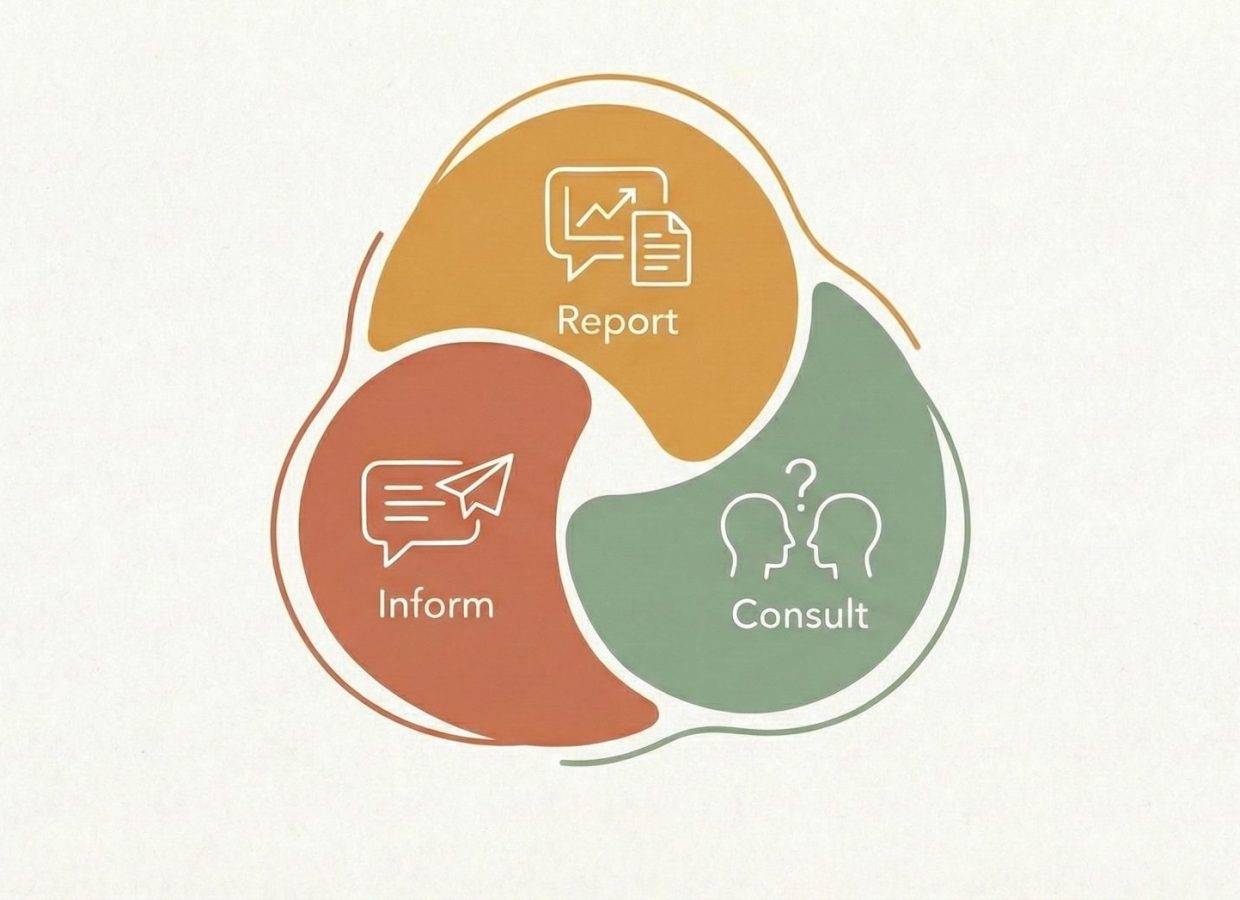
💡 Be mindful of reporting, contacting, and consulting. Example) Regular progress reports
💡 We made sure to visually confirm things with each other using screen sharing during video chats.
We conducted meetings via video chat as much as possible, not just text chats.
As the iterations progressed, my ability to break down elements and communicate them grew.
💡 Since long sentences can lead to misunderstandings, I gave clear, concise instructions using short sentences whenever possible.
💡 By learning common phrases used when giving instructions, I’ve become able to give instructions more smoothly.
We shared English expressions used in instructions.
The Filipino manager set standards for work hours and other things, which allows us to predict the necessary work hours in advance.
Reporting and communication are extremely important, but in reality, simply saying "report your work progress" doesn't get people to act.
You need to specifically instruct them "Report your work progress via chat to the director at 12 PM, 3 PM, and 5 PM."
If given specific instructions like these, they will follow them exactly. (This is the same for Japanese people too.)
Conversely, if they do not comply, you can inform them that they will receive a negative performance review if they do not improve, and thereby encourage improvement.
If there is no improvement, we can impose appropriate penalties according to the employment contract, assuming such a provision is included in the contract.
Japanese people complain that others "only do what they're told," but if you think about it the other way around, it means they "do thoroughly what they're told."
In a contractual society, doing anything beyond what's specified in the contract is a breach of contract.
Vague instructions, a specialty of the Japanese, are completely ineffective in the world.
💡 Google Translate, DeepL, Grammarly
Google Calendar
💡 Adobe XD Collaboration and Prototyping
💡 Piquet (online proofreading tool developed by our company)
Video conferencing such as Skype, Meet, etc.
Since establishing our company in the Philippines, translation tools have become a necessity.
If it hadn't been established, I probably wouldn't have used translation tools much. Considering that, it's a big change.
Some employees have taken this opportunity to study on their own and become fluent in English!
"Piquet" is an online proofreading tool to communicate corrections. We developed it to communicate with them after establishing a Philippine corporation.
It's very convenient because you can communicate specific corrections and share the content with the QA team for internal proofreading.
The instruction format is coming together.
💡 I've become proficient in using business terms in English.
The number of days/time required for design and development has become clear.
As the number of repetitions increased, experience accumulated, such as "this expression gets across" or "this doesn't get across as intended."
It seems to have been gradually improved through trial and error and creative ingenuity.
Some companies have visited us and established a base in the Philippines, but they seem to be struggling, just like we were. Nothing is achieved overnight, is it?
💡 Organize information with 5W3H in mind.
Don't use roundabout Japanese expressions.
💡 Strive to provide logical instructions (sentences).
💡 Instructions (English) should be brief and concise.
When something is difficult to convey, share it visually, such as by adding instructions to images.
If I can't get through to them in two tries, I'll have the Japanese manager who's stationed here step in.
I always start with the conclusion directly and then provide additional explanations such as the reasons why and the current situation. (PREP method)
💡 Do not use vague language. For example, instead of "make it bigger," use "set to XX pixels." Specify values for colors, spacing, font weight, etc., as much as possible.
Don't you look at it and think, "Isn't that obvious?"
For some reason, when Japanese people give instructions to other Japanese people, all of these things are neglected.
It's strange, isn't it? For such low-quality instructions, Japanese people ask for high-quality output... (wry smile)
Actually, we specifically created a subsidiary in the Philippines to provide opportunities for communication in our operations, so that people would understand that "uniquely Japanese ambiguous instructions don't work at all in the world."
These days, being limited to working only with Japanese people is nothing but a risk.
When communicating with Japanese people, it's easy to convey your message because they understand Japanese.
💡 Japan has low diversity, so it's easy to talk within the same context.
💡 Being able to understand Japanese makes a big difference in jobs where comprehension is related to quality. Examples include design (especially DTP) where character layout is important.
When giving detailed instructions, it's easier with someone who understands Japanese.
When it comes to frontend development (like web coding), there's no difference in speed or quality between Japan and the Philippines.
For technologies where the Philippines has a proven track record, it's faster than relying on Japanese engineers again.
💡 機械的に進める作業は日本人と変わらない。
💡 外国人が相手だと、ちょっと電話して(日本語で)説明する、というのができない。
多くが言語由来のものです。
仮に、フィリピン人が日本語を使えたら?・・・日本人との差はなくなるようです。
では、英語圏を相手にしたときはどうでしょうか?
フィリピン人は英語が話せますから、英語圏の企業に選択されるのは親会社の弊社(日本法人)ではなく、子会社のフィリピン法人ということになりますね。
こう考えると日本の優位性がほとんどありません(汗)
💡 日本人の得意: 日本語のデザイン。 主体的に創意工夫しようとする姿勢は日本人の方が高めな気がする。 フィリピン人の得意: ルールに則り与えられたミッションを正確にやる。
💡 違いはない。言語による差異があるだけ。 逆に顧客が全て英語圏だったら、上記の質問の答えは全て逆転すると思う。
💡 特にない。
実際に働いてみての感想は、「当初思っていた、感じていたほどの差は、今は感じない」ということのようです。
言語由来の不安は大きかったようです。
しかし、それを言い訳にせず、両社が創意工夫、試行錯誤することで、業務のスピードと品質を高めることができました。
翻訳ツールなど、ランゲージバリアを低く、薄くする文明の利器も無数にありますからね。
案外、コミュニケーションの不安の大半は慣れで解決していくようです。
その結果、「確かに日本語で指示できないのは不便だけど、業務に支障がでるほどではない」となりました。
「日本語でしかニュアンスを伝えることができない」というものも、英語表現を覚えたり、以前やったプロジェクトを例に出して「前回と同じような雰囲気で」と伝えることはできます。
このように諦めずに継続していくことで、互いの業務コミュニケーションも上達していきます。
また、興味深い変化としては、フィリピン法人とのやり取りが当たり前になってからご入社くださった社員さんやアルバイトさんたちは、普通にフィリピン法人のスタッフとやり取りをしています。
彼らの先輩たちが英語と異文化に拒否反応を起こし、恐る恐るコミュニケーションをとっていたことを考えると、全く違います。
こうした「当たり前」環境を創れると、後が楽ですね。
前述しましたが、一朝一夕にはいきませんが。
今後、機会があれば、
How is the life of Japanese expatriate staff?
How do you handle recruitment?
に関連した記事も書いていきたいと思います。
ご期待ください。
同じカテゴリーのブログ
SAME CATEGORY
# Management
Why ”Horenso” is Difficult to Translate - The Story of Japanese Business Practices and the "Smile Creation" Philosophy
# Management
# Marketing
# Branding
The LH Method – An Original Framework for Deeply Unearthing Challenges
# Management
# Branding
Inner Branding Utilizing Office Space
