


BLOG
Blog

As a global branding agency, this project delivers "first-hand information" on the current status of our overseas offices.
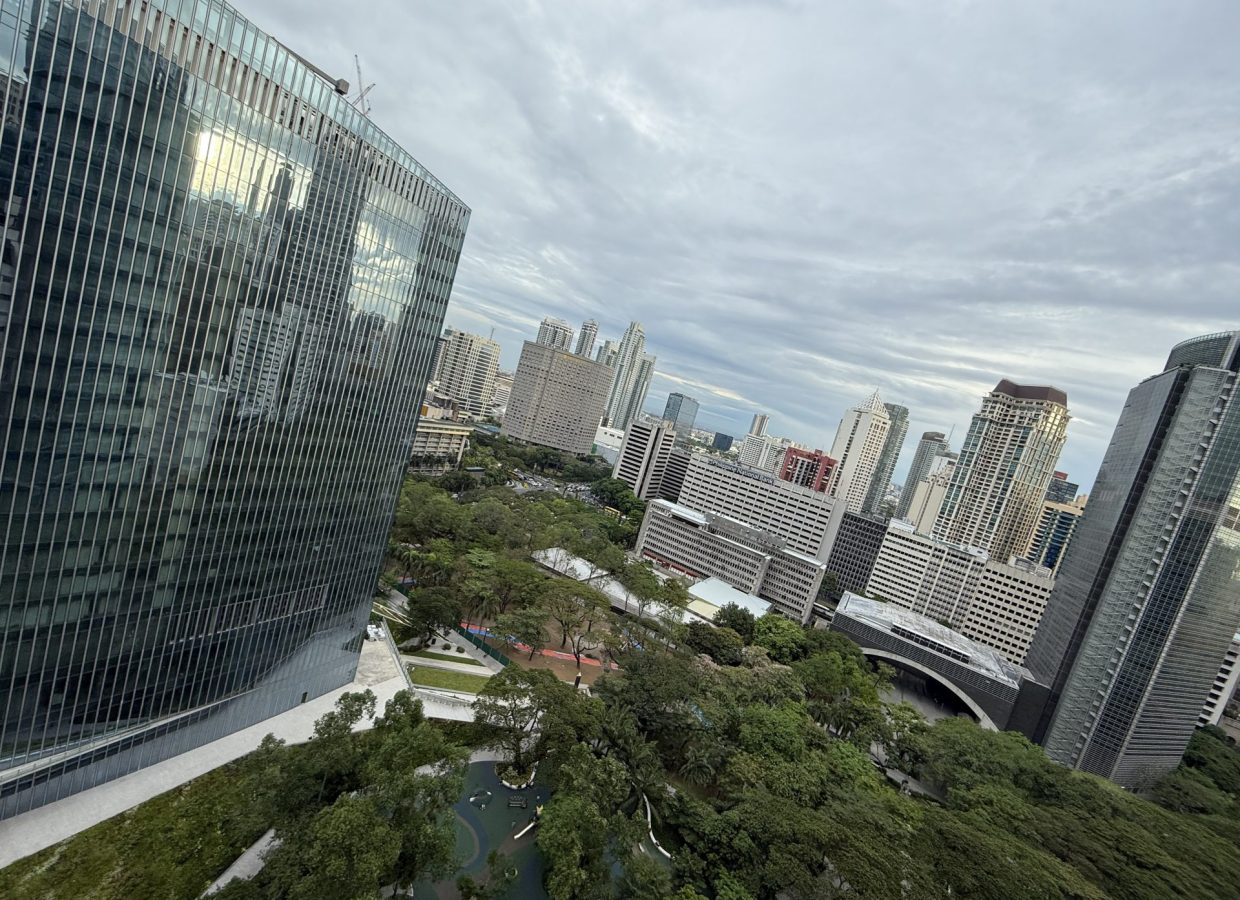
This time, to share real on-the-ground information, we have stationed ourselves in Makati, the business center of the Philippines.Ukchan (Ukai) to Naiki from Public Relations.conducted a hearing. Including the heart-wrenching voices of local Filipino staff, we will show you what cannot be seen in the news alone.Philippine situationWe will tell you the other side.
Naki: I look forward to working with you today. To get straight to the point, from your perspective on the ground, what do you feel is the biggest factor driving the current changes in the situation in the Philippines?
Ukai The biggest trigger, after all, isMiddle East issueI agree. I'm sure there have been news reports about rising gasoline prices in Japan as well.The Middle East issue and the PhilippinesThe connection is stronger than you might imagine.
Naki: Geographically, they are quite far apart, right? Why would there be such a direct impact?
Ukai Actually, the Philippines procures nearly 80-90% of its oil from imports from the Middle East. Therefore, if the supply chain is disrupted, it directly leads to an energy crisis for the country.
From the local staffGasoline prices have surged by up to 200%.There are voices calling for action. The government is also implementing measures such as exempting excise taxes on LPG (liquefied petroleum gas) and diesel, but from the citizens' perspective, these are like "pouring water on a scorched stone" and do not provide a fundamental solution.
Naki: What's the vibe like around Makati where Uchan actually is?
Ukai The first thing I see and am confused by isPhilippine transportationThe infrastructure is in a state of crisis. The number of "jeepneys" (shared buses) and "UV Express" (shared vans), which are the public's means of transportation, has drastically decreased, leaving bus stops throughout the city overflowing with people unable to travel.
Naki: I heard there's a strike by drivers.
Ukai Yes. They are not on a salary, and they have to pay for their own "lease payments" to car owners and "gasoline costs." With gasoline prices rising this much, they can't even fill up their tanks with a single day's earnings, and the more they drive, the more they lose money. Because of this, many drivers are temporarily halting operations.
On-siteA large-scale transportation strike is scheduled to take place in Manila from April 15-17, 2026.There's also information circulating, so there's a constant sense of tension.
Naki: Isn't it also affecting the commutes of employees at LH&Creatives Inc. (local subsidiary)?
Ukai It's quite serious. For example, our local staff member Dell, who normally commutes by his private car, is now forced to use P2P (point-to-point) buses because the gas prices are too high.400 pesos round trip (about 1,000 yen)They are also experiencing significant hardship because the jeepneys they are supposed to take for the last mile from the station to the office are not available. The options for EVs (electric vehicles) are also still limited domestically.
Naki: If just transportation costs increase that much, the impact on daily life seems significant.
Ukai That's right, food prices are also remaining high due to soaring transportation costs, and local staff are wary, thinking, "Are electricity prices going to go up next?"
Naki: How is your concern about public safety?
Ukai This is the scariest part, and among the staff tooSurvival crimeIt's been a topic of discussion that there's been an increase in these incidents. Commuters stranded on the streets at night due to losing their means of getting home because of strikes are becoming targets for snatch-and-grab robberies and muggings. During an already difficult economic time, commuting itself is becoming a significant risk both physically and in terms of safety.
Naki: We are concerned about staff safety, but how is our company (LH&Creatives Inc.) responding to this?
Ukai Actually, the Philippine government itself isTo curb the entire nation's fuel consumption, strongly recommend that private companies transition to WFH (work from home).They are. The Department of Education (DepEd) has also allowed the switch to online classes to reduce the burden on households, and some IT and BPO companies have introduced full remote work or a four-day work week with 10-hour days (compressed workweek).
Naki: The country is trying to reduce travel, aren't they? Is LH&Creatives Inc. also fully remote?
Ukai No, for reasons specific to the Philippines, "it's also risky to make everyone fully remote." If there's an energy shortage, there's a high risk of "rolling blackouts" being implemented in suburban residential areas first. On the other hand, Makati, where we have our office, is a business hub, so it's easier for electricity to be maintained there until the end.
Naki: I see! So there's a risk of not being able to work at home.
Ukai That's right. That's why at LH&c we currently,Hybrid model of "3 days in the office and 2 days remote"We are introducing this. This allows us to ensure stable office infrastructure and continue our operations while reducing transportation costs and commuting fatigue for our staff, so they don't have to use expensive ride-sharing services.
Naki: That's a realistic judgment that could only be made by someone with the voices of the on-site staff and in-depth knowledge of the local infrastructure. I learned about the real situation that you can't understand just by watching the news. Thank you, Ucchan!
How was it? The fact that the faraway Middle East problem is directly connected to local issues in the Philippines, such as strikes, price increases, and even citizen safety through "survival crimes," is primary information that is difficult to grasp without being on the ground.
At Lionheart, we support businesses with a global perspective by consistently incorporating "real information and ground-level insights" from overseas. For those interested in international affairs or expanding overseas, please be sure to check our future reports.
Blogs in the same category
Same Category

# Other News
# Branding
End aimless actions. People and organizations' accompaniment-style support "HR Method."
# Other News
Recommended Hotels for Business Trips to the Philippines | How to Choose a Hotel in Manila (Makati) Without Making a Mistake
# Other News
Notice Regarding the Appointment of Outside Director Candidates