


BLOG
Blog

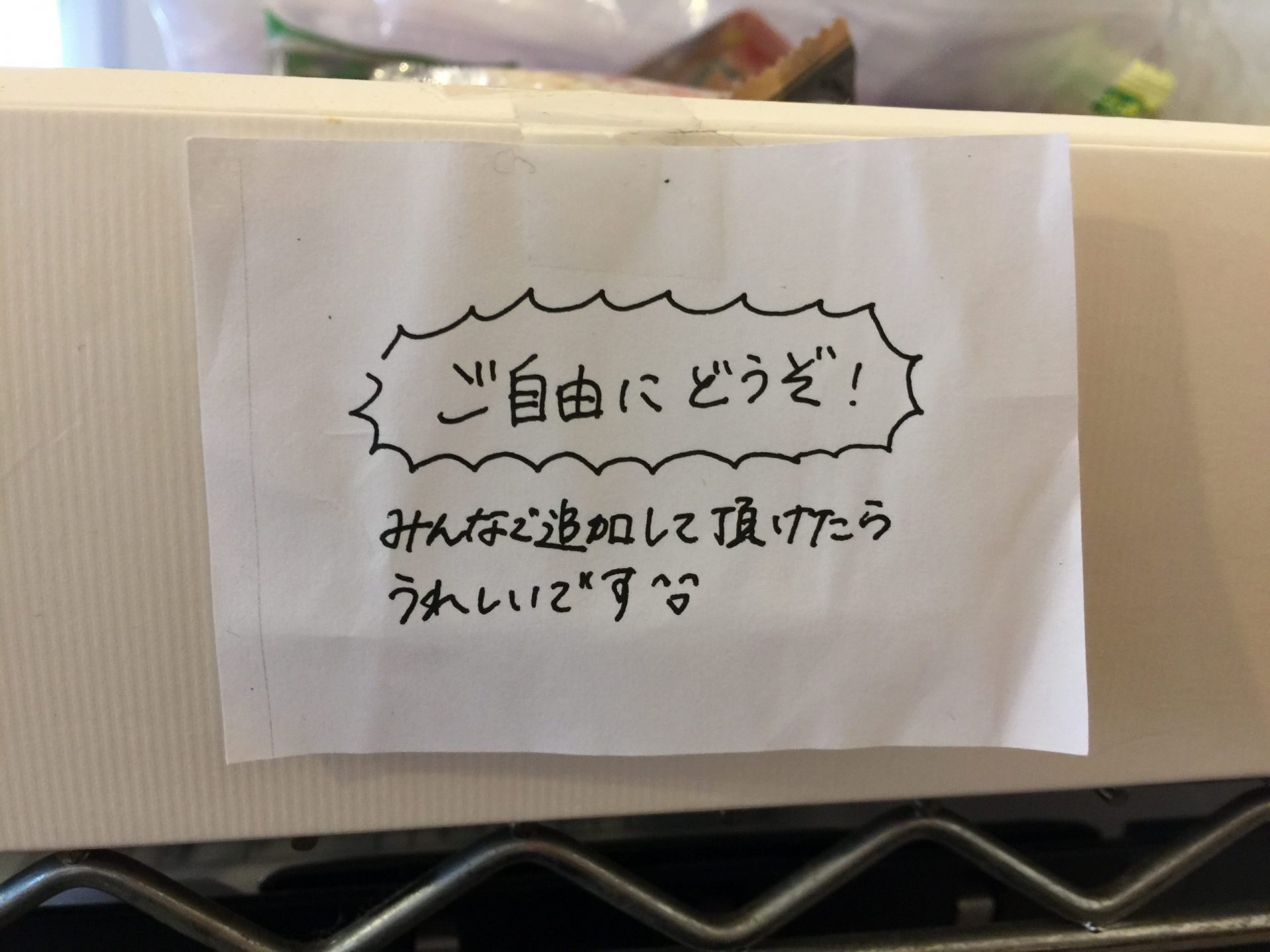
Some companies provide snacks in the office as part of their employee benefits, right?
Recently, more and more companies are introducing services such as office convenience stores.
Actually, we've created a box of snacks that our employees can enjoy freely while working.
(We call it the "candy box.")
In this day and age, with office convenience stores everywhere, this isn't exactly something new.
So, why did I write this article about it? Well, it was a female employee who had only recently joined the company who initiated the idea.
And the candy boxes she created brought a little change to our lives!
Don't underestimate the power of mere sweets... I never imagined they could contribute so much to internal branding.
Now, before we talk about the candy box, let's consider the circumstances new employees find themselves in.
From the day they join the company, new employees become colleagues with people they have never met or spoken to before.
"Yes, we're colleagues starting today!"
And even if the new employees themselves join the company with enthusiasm, wanting to "showcase their abilities!" and "make a difference!", the reality is that...
Will I be able to live up to expectations...?
I wonder if there will be someone who will treat me kindly...
I'm constantly feeling anxious and nervous about whether I'll be able to build good relationships...
This kind of mental strain will likely continue for the first few months until you get used to it.
I myself have changed jobs, but I never want to experience that kind of stress again.
New employees, to varying degrees, find themselves in situations like this.
It was about a week after the main character of this story joined the company. Suddenly, she sent the following chat message to all the staff.
We experimentally placed a "snack box for everyone to share" next to the refrigerator.
Since I was the one who suggested it, I occasionally add some candy, chocolate, or other small sweets.
It's not mandatory, but I would be very happy if you could add any recommended snacks or treats.
We want to bring smiles to everyone's faces, so please feel free to eat within the bounds of your common sense! (Original text)

This behavior is typical of someone who has just joined the company and is still learning how to do their job.
I'm sure he still only vaguely remembered the names of the staff members.
In the midst of all that, she made an effort to communicate in her own way.
"We never expected a new employee to make such a suggestion!!" We were surprised and delighted by this unexpected development.
I suspect that after joining the company, she received new employee training and simply put what she learned into practice.
I'd like to introduce our company's training program in more detail if I have the opportunity, but a key feature is that "the training curriculum and courses for new employees are shared among everyone, with each person taking responsibility for them."
Senior employees also approach teaching others what they have learned, believing that "teaching is learning."
Actually, before I became a full-time employee, I worked at Lionheart for a long time as a part-timer, and even back then I was in charge of customer service training (which was quite strict).
Through new employee training, we convey essential information for working together as a member of the Lionheart team, including our core values and philosophy, work processes, and business etiquette.
Having received training from our company's new employees, she honestly put what she learned into practice and acted upon our philosophy of "creating smiles" for her colleagues.
Can we really just leave this as it is?!
From the next day onwards, everyone started adding various sweets, and even now the sweets box is full of them.
And this candy box did more than just satisfy our hunger!
Casual conversations like, "Who brought these delicious sweets?" or "Do you know about these sweets...?" naturally arise, and people learn about their colleagues' preferences and personalities through the sweets, making them a very useful communication tool within the company.
I've also started to quietly offer snacks and say a word of encouragement to colleagues who seem overwhelmed and stressed from their work.
There are also other stories like this.
A young male employee brought in some more snacks, but they don't seem to be very popular, as they're not getting any less out of the box...
Apparently, she was feeling a bit down and told her mother that she was thinking of packing up and leaving.
The next day, the mother gave them some sweets she had personally chosen, and those extra sweets were an instant hit, disappearing into everyone's stomachs immediately.
The employee said that they felt their mother's kindness and greatness.
In this way, communication is not limited to within the company, but is being generated from these snack boxes.
The woman who created the candy box has continued to come up with ideas to improve the company ever since.

For the past year, every time a state of emergency has been declared, we have responded by working remotely.
I no longer feel the same level of unease or confusion when carrying out my work under these circumstances.
On the other hand, I've come to strongly feel that communication with others is absolutely essential, no matter the circumstances.
If we define "essential communication" as the interactions absolutely necessary to carry out work, does that mean that all other forms of communication are not essential?
Interestingly, a lack of seemingly unnecessary communication seems to make people more prone to feeling anxious and lonely, and we have actually heard such comments from people at our company.
Being in the same space, having casual conversations that start unexpectedly, and realizing the importance of seeing the expressions on your colleagues' faces—these things make me appreciate this once again.
Amidst calls for social distancing during the COVID-19 pandemic, we must avoid letting emotional distance grow between us.
Blogs in the same category
Same Category

# Management
Requests for "cleaning up after AI" increased by 87%. The reason repair work is often undervalued is because there isn't a "correct" solution before the repair is even done.

# Management
The reason internal branding isn't taking hold isn't the employees' fault. It might simply be that management "hasn't taken action yet."
# Management
Developing an AI-powered project management tool in-house — The faster we create things, the more important it becomes to understand "why we are creating."