


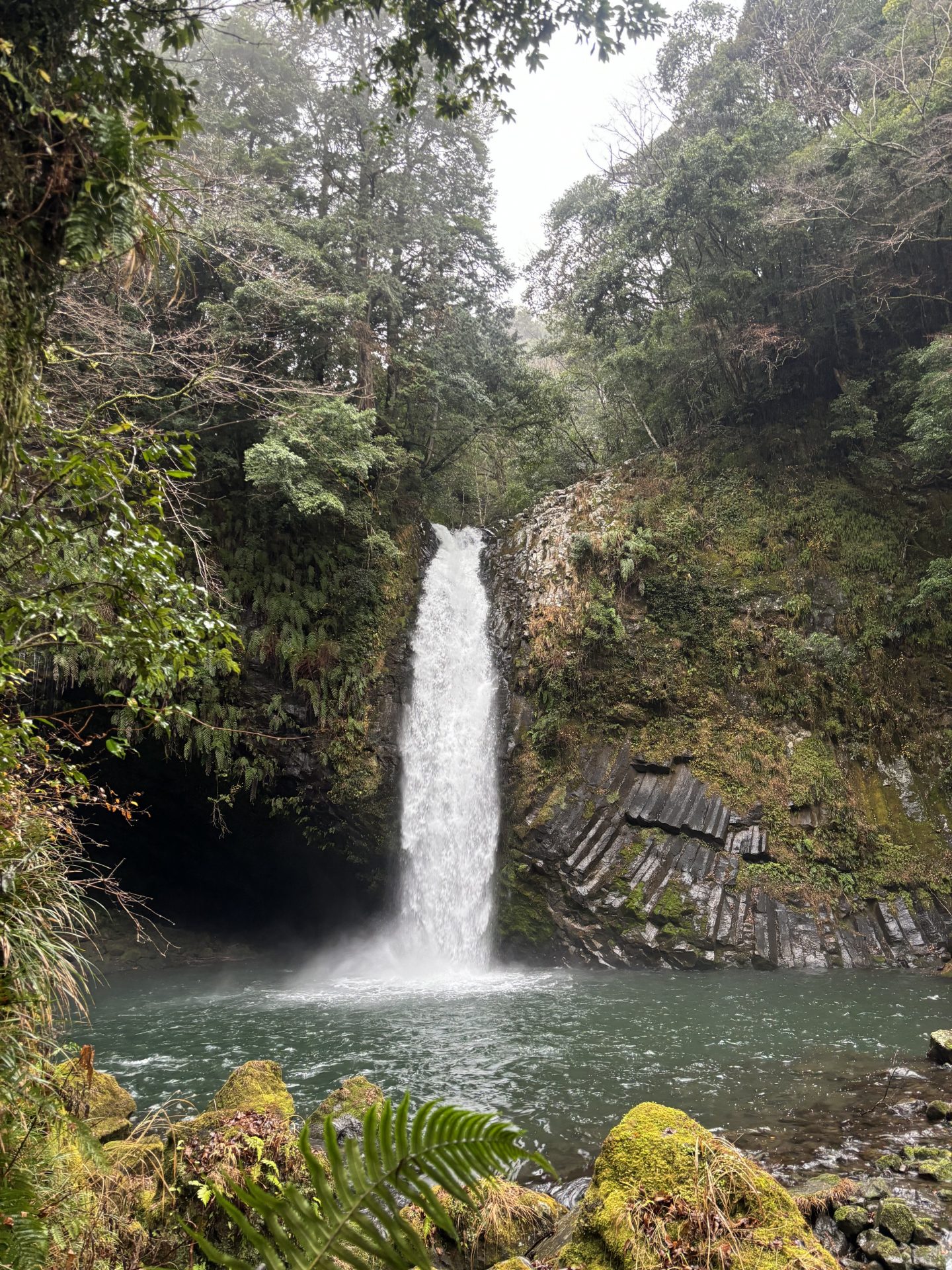
Companies hold retreats for a variety of purposes, including articulating values such as philosophy and vision, creating management plans, designing and developing new services (such as development camps or hackathons), and training new employees.
It seems our company also held a management retreat in January of this year. The president suggested that they try holding a management retreat, and they did so. Our PR team asked the president and management team several questions, and I'd like to share what we learned in this article.
The participants were the Chairman, President, Managing Director, and a candidate for executive position.
We hope this will be helpful for those considering a management retreat.
Theきっかけ (trigger) was learning that some of the business owners around me were holding executive retreats to create business plans.
I believed it was important to rebuild trust among senior management.
Therefore, the goal was to strengthen the trust among senior management.
We hope to share our company's future vision and deepen their understanding of it.
It says "rebuilding trust," but it doesn't seem like they're on bad terms (laughs).
I thought it was unusual for the president to request, "This is what I want to do."
I believe the president's words about "rebuilding mutual understanding and trust among executives" came about after I told him at a management meeting that "the management team needs to be united."
There must be some reason (purpose) behind it, but from what I heard, it was something like the "law of familiarity," so I wondered, "Is a training camp really necessary!? Is a training camp the best method!?" (It costs money and time, after all.)
The purpose seems vague.
I simply thought it looked fun.
Since we were in a transitional period where we were wondering "which direction should we take our next step?", I felt that having a forum to discuss the future would be a good opportunity.
I had done it a long time ago, and I remember being able to talk about a lot of things frankly back then, so I had a good impression of it.
Since it was a training camp with members who could decide for themselves how to engage with the opportunities in front of them, I didn't have any negative feelings.
Apparently, when he heard the president's proposal, he didn't feel like, "I have to stay overnight with my colleagues on my day off... I don't like that." (laughs)
Executives are not subject to the limits on working hours and overtime stipulated by the Labor Standards Act, so they may not be able to say "no"...
I feel that the feeling of stepping away from everyday life (reality) is important. I think it allows you to relax and makes it easier to create lighthearted communication.
Even if we rented a meeting room near the company, it would feel the same as always, so I don't think any kind of chemical reaction would occur.
Seeing them in casual clothes (like loungewear) and looking more relaxed than usual is something you only get at a training camp, right?!
Changing the environment led to changes in thinking and behavior, and had the effect of increasing familiarity, making people think, "I didn't know there were still these aspects."
Since these are members who wouldn't normally spend extended periods of time together unless we deliberately created opportunities for it, I feel that "going out of our way" to hold a "training camp" was meaningful.
I just went on a trip, ate a meal, stayed one night, and came back, but I was able to talk about things I'd never talked about before, and I really felt the "law of familiarity" working at full force.
The team members were able to talk freely about the company and its future without the formality of a meeting. There were some silly things said, but even amidst all of that, there was a sense of unity growing between us.
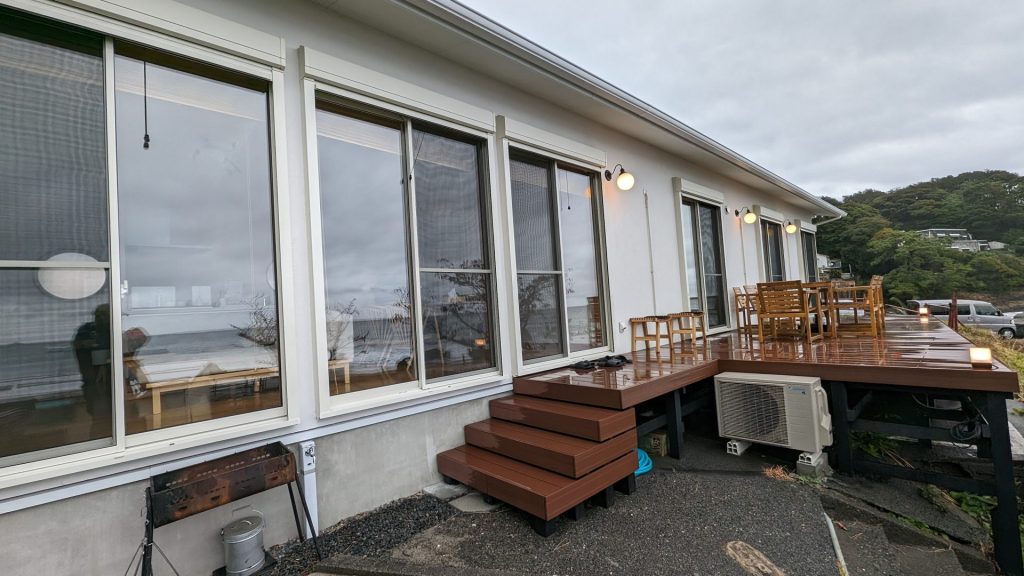
Since it was a vacation rental rather than an office, we were able to talk without worrying about the time.
We felt that this kind of approach, rather than a rigid, stiff meeting, was more in line with our style. This feeling is similar to what the chairman has been saying recently: "Achieving results without overexerting yourself or forcing yourself."
The things I learned were largely a combination of what could be explained in words, what was intuitive, and what I gained from extraordinary experiences.
All four participants seemed to have positive impressions of the benefits of getting away from their usual environment and going somewhere far away. Perhaps company trips have a similar effect.
It was simply fun, like a trip.
Watching the executives speak gave me a sense of reassurance.
I believe that the opportunity for executives who rarely spend long periods of time together to spend casual time together and talk is essential for fostering a sense of unity among them.
It wasn't just about aligning our thoughts, but about aligning our feelings. It was about aligning our breathing. That's the kind of step it was.
I was able to discuss my concerns about the future of the area I am responsible for.
Being able to hear about the managers' performance from the perspective of each executive has made me feel more confident in delegating responsibilities.
I was impressed when the president confided his own vulnerabilities while giving a message to the executives.
Although I'm not in a position to be directly told "do this" or "do that" by the president, being able to hear his thoughts makes it easier to unite our efforts.
I was able to get the feeling that "this is actually what the president wanted to do." (My understanding of the president deepened.)
I realized that seemingly insignificant things, like knowing people's food preferences, are crucial elements in terms of building a deep understanding of them. As a result, I came back liking everyone even more than before I went.
I felt, "This kind of organization isn't so bad." The only thing that changed between before and after going there was that I grew to like this team a little more. And that's very important: an organization is made up of people.
Through the "law of familiarity," we were able to sense each other's small changes and growth.
Since each person has their own values and expertise, it was a great opportunity to learn about what they feel and think from their respective perspectives.
With our office relocation, it was a time when we had many opportunities to think about the purpose of the office, and spending time with colleagues in a place that was neither home nor the office was meaningful (in terms of understanding the effects of place and space).
It seems that they thought they knew each other well enough, but in reality, there was still much they didn't know. In any case, they were glad to have come to understand each other better. When you think about it, even though we see each other every day at work, we only know a small part of each other's lives, just a few hours at most.
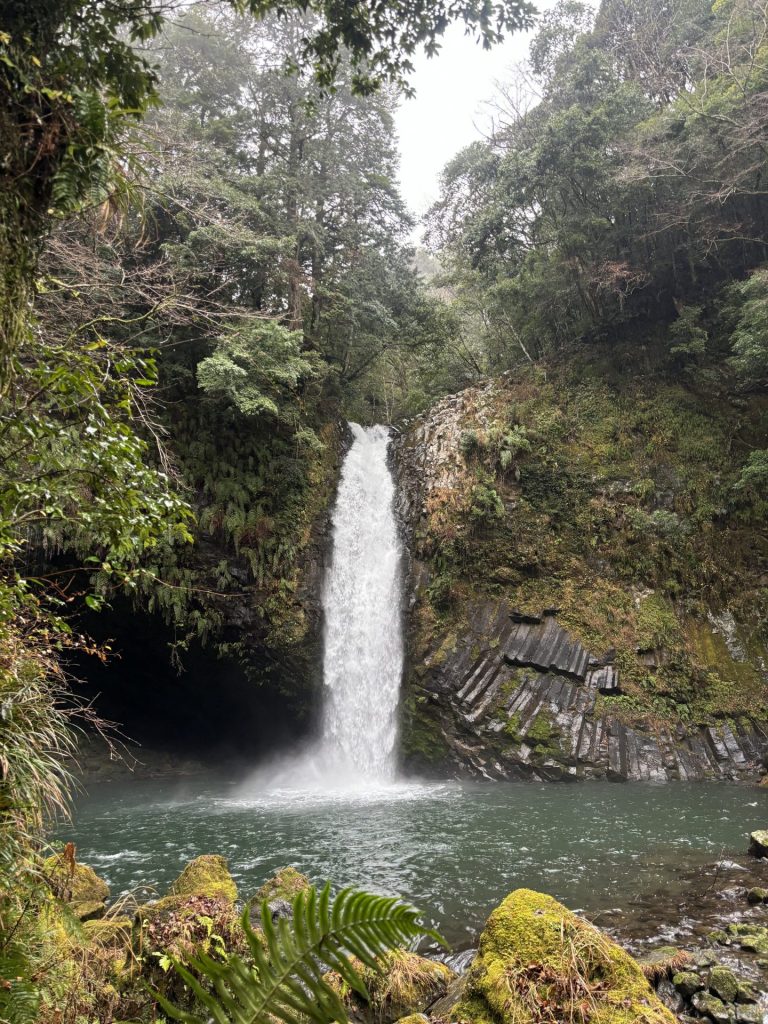
The "Law of Familiarity" made me like each person even more.
We picked out some accommodations and asked each person for their opinion, and it was interesting to see how their preferences were so divided.
The "law of familiarity" was also at play in this process.
I feel like I've finally understood what makes Lionheart unique and what I want to be.
I was able to experience a vacation rental that I wouldn't normally choose for personal use.
Since I was in charge of selecting the facilities, I saw countless inns, hotels, and vacation rentals, which greatly increased my knowledge and experience.
Since we also had an office relocation project, I was able to take an interest in the interior design and location.
I realized that I have very little interest in famous places like landmarks, and that I'm more interested in food and experiences.
And I was able to reaffirm that I'm not very good at planning and often act on intuition.
I felt relieved, but also more determined, to realize that there wasn't a significant gap between the future I envisioned and the future envisioned by the other management team members.
One of the tasks of a senior executive is to turn abstract concepts into concrete ones.
For example, it may be necessary to clearly define evaluation criteria and internal rules, deliberately drawing lines between them. In many cases, even knowing that there is no answer that will satisfy everyone, rules and systems that are not really necessary are established. Systematizing and increasing reproducibility are important for companies.
However, on the other hand, I think this is a company that also understands that "important things can be found among the things that slip through the cracks and fall through the cracks."
I was able to reaffirm that point.
I realized that my role isn't to conform to what society has to offer, but rather to digest and incorporate what's considered normal in society in a way that's uniquely ours.
I want to do things like that without trying too hard.
We may not be outwardly passionate, but what we do is incredibly exciting and fascinating. That's the kind of group we want to become.
This became one of my motivations for becoming a director.
The insights gained varied depending on the role and areas of interest of each executive, but it seems that everyone gained some valuable insights.
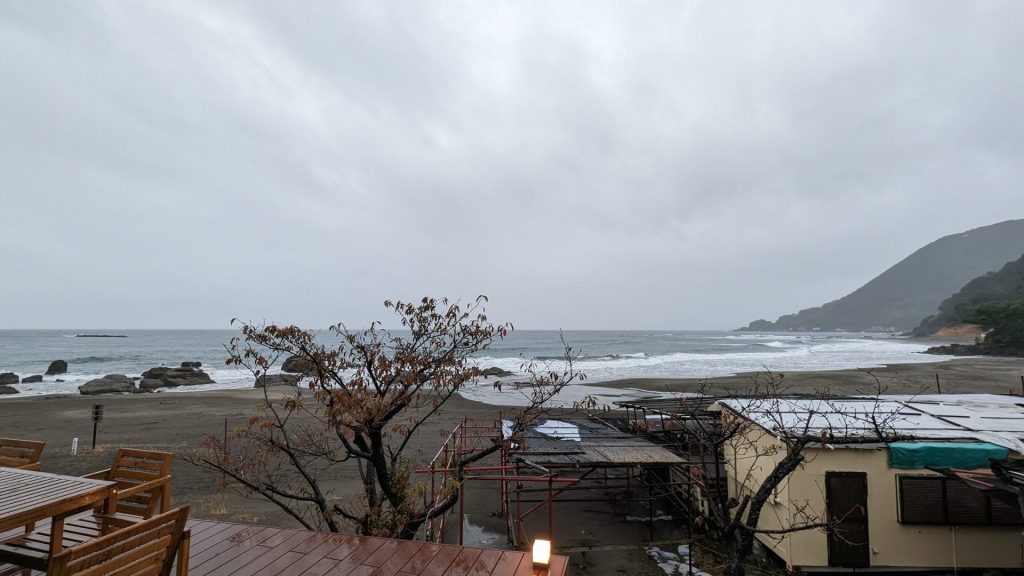
I'd like to try it in the summer. This facility is right on the beach (sandy beach) and has terrace seating, so I wondered what it would be like to come here in the summer.
We can talk more thoroughly at a vacation rental, and I'd like to consider that option again next time.
Glamping might be a good option too.
We want to stay longer than this time. We'd like to spend time in an area that none of us have been to before, like a remote island or deep in the mountains, somewhere where we don't have to worry about time.
I'm interested in places that have something outstanding about them (like something that's world-famous).
Maybe we should have some kind of activity?
I felt that cooking is a great way to improve your skills while having fun!
I'd like to try visiting various places and gaining experience through inspection tours (including overseas).
I'm perfectly fine with going overseas.
The participating members want to share experiences and encounters they've never had before, in places they've never been to.
It's interesting that no one suggested choosing a location close to their office or home.
They seemed to be acutely aware of the impact of physical distance and unfamiliar environments.
I was also surprised to hear some people say they wouldn't mind a stay longer than one night and two days.
For regular employees, this is similar to employee training or seminars. The time axis is the present.
Therefore, many of the results are available on the same day. (For example, participants may feel more energetic for several days after the training, or be able to exchange business cards correctly.) The units are measured individually (by the participant or their colleagues).
For managers, the idea is to use it to make decisions and collaborate across departments, while maintaining sufficient communication with managers from other departments.
Although I hold a management position, I'm a playing manager, so I'm usually very busy. As a result, I don't have enough time to communicate with managers from other departments and dedicate to improving the organization.
The content can range from issues perceived by individual departments (crossing departmental boundaries) to the formulation of strategies and tactics for one's own department as outlined in the management plan. Therefore, the unit is the organization (department).
The timeframe is roughly this term and next term.
The results of the training camp aren't immediately apparent, but the decisions made are shared among the managers, and the organization gradually begins to move towards those goals.
For executives, the time axis is the future, several years from now.
The units are organizations (companies) and societies. Therefore, the results of a training camp are difficult to see. (However, it can be a turning point, as in, "What we talked about at that training camp...") Even without setting a specific agenda, simply spending time in the same place allows everyone to share their perspectives from their own elevated viewpoints, and the conversation naturally turns to the future (ideal state) of the organization.
This naturally leads to discussions about current and potential future challenges. As a result, the content ends up resembling a draft of a business plan.
I think one of the benefits of a manager's training camp is for managers to deepen their connections with each other.
Actually, that's really important. Since you both understand and empathize with each other, I think you can have a great time just by sharing relatable experiences.
Managers are often caught between high-level management and subordinates who are overwhelmingly dependent on them, so having someone who understands their position is essential.
No matter how far they go, executives always have a forward-looking perspective.
The perspectives are society, the world, and the heavens.
The impression I get is that the managers' retreat is a gathering to solve the problems that are currently visible.
For regular employees, the main purpose is probably a social gathering to get to know each other better.
However, what we really want from managers is for them to look beyond the current measures. In other words, to raise their perspective. If they do that, I think the motivation for general employees to participate in the retreat will also change.
This is the same in meetings and other situations: differences in perspective.
Executives discuss the future while simultaneously examining current challenges (the gap between ideals and reality).
Employees tend to focus on immediate or near-imminent challenges.
The main differences lie in the breadth of topics discussed and the length of the time frame, which depend on the perspective.
All four executives mentioned the difference in perspectives. When conducting a training camp, being mindful of "differences in perspectives" may improve the quality of the camp.
I think it's fine to just "give it a try."
It's necessary to align our perspectives to some extent.
If only the CEO has a high salary, and the difference between them and the other members is significant, it will turn into a one-man show by the CEO.
From the executives' perspective, it's the same old story and completely uninteresting. I think the president will also be left feeling unsatisfied and dissatisfied.
Therefore, it might be a good idea to be aware of where the executives (the organization) are in their growth phase.
The relationship between the president and the executives is also important.
I imagine a training camp would be tough if the person you're working with is someone you like as a business partner but not someone you personally enjoy being around.
It could easily lead to someone thinking, "I really don't like this person."
The "Law of Familiarity" means that if you dislike someone, you'll end up disliking them even more, so be careful.
I think there are quite a few companies that utilize training camps for their employee development programs.
However, when you hear about how we spend our time, you might think, "Isn't that just a regular vacation?" But if you forget about preconceived notions and just interact with other people, you'll discover things you never thought possible.
Organizations are built on people, as they say. One business organization even has a phrase: "management that respects human beings."
However, even company executives are ultimately just other people who spend a certain amount of time together within the confines of the company. In other words, they are just "people from the company." Have you ever consciously looked at each of them as an individual? I think it's definitely worth trying.
Of course, it also depends on the company culture, philosophy, and vision.
There were discoveries, even small ones, that the executives didn't know about each other.
When envisioning and sharing the company's future, it's essential to have the trust of senior management who will support you in steering that path.
Since I've only recently started participating in management meetings, I still have a limited view of the future. However, by listening to various discussions about the future, I feel like I've been able to form a clearer picture of what's to come and gain a better understanding of what to expect.
This might also be effective if you have members like that.
While there are conditions such as aligning perspectives, and suitability may vary depending on the company culture and philosophy, they said it's "worth trying."
Our company president seemed pleased with the results and said he wants to try it every year.
This is based solely on our company's experience and the opinions of our management team, but we hope it will be helpful for those considering holding a company retreat.
Blogs in the same category
Same Category
# Management
Developing an AI-powered project management tool in-house — The faster we create things, the more important it becomes to understand "why we are creating."

# Management
The reason why I've started wanting fewer things and why I can't put my purpose into words are probably the same thing.

# Management
What a business leader should really do when they realize, "I can't compete with him."
